Römerhöhle
Römersteinbruch Aflenz
Useful Information
| Location: |
Retzneier Str. 11, 8435 Wagna.
(46.7492279, 15.5494491) |
| Open: |
After appointment. [2025] |
| Fee: |
School classes free. [2025] |
| Classification: |
 Rock Mine Rock Mine
 Room and Pillar Mining Room and Pillar Mining
|
| Light: |
 Electric Light Electric Light
|
| Dimension: | T=8 °C. |
| Guided tours: | Min=1. |
| Photography: | allowed |
| Accessibility: | no |
| Bibliography: |
(1986):
Beilage, Blätter Römersteinbruch Aflenz
In: R. Näderl, G. Suette; W. Gräf (Projektleitung): Systematische Erfassung der Festgesteinsvorkommen in der Steiermark. Endbericht (unveröffentlicht).
Forschungsgesellschaft Joanneum – Institut für Umweltgeologie und angewandte Geographie, Graz 1986, S. 862-864.
pdf

Dr. Val. Pogatschnigg (1890): Steinbrüche in Steiermark In: Culturbilder aus Steiermark, Leykam, Graz, 1890, S. 55-73. pdf
Franz Krašan (1897): Das Tertiärbecken von Aflenz, Mittheilungen des Naturwissenschaftlichen Vereines für Steiermark, Heft 33 (1896), Graz, S. 51-69. pdf
Gert Christian (1999): Die Muschelkalk-Sandsteinbrüche in Aflenz bei Leibnitz (Marktgemeinde Wagna, Steiermark) In: Mitteilungsblatt der Korrespondenten der Historischen Landeskommission für Steiermark, Heft 6, GRAZ 1999, S. 22-32. pdf
Andreas Rohatsch (2004): Werksteinbeschaffung für die Baudenkmalpflege während der Zeit des Wiederaufbaus nach dem 2. Weltkrieg In: Aus Trümmern wiedererstanden - Denkmalpflege 1945 bis 1955, S. 472–476. Edition: Austriaische Zeitschrift für Kunst und Denkmalpflege Heft 3/4. researchgate
|
| Address: |
Marktgemeinde Wagna, Franz-Trampusch-Platz 1, 8435 Wagna, Tel: +43-3452-82582.
E-mail: Führungen: Walter Gluschitsch, Tel: +43-664-3839874. E-mail: |
| As far as we know this information was accurate when it was published (see years in brackets), but may have changed since then. Please check rates and details directly with the companies in question if you need more recent info. |
|
History
| 15 BC | opened for the construction of the Roman city of Flavia Solva. |
| 12th century | reopened for the construction of sacred buildings. |
| 1943 | branch of the Thondorf aircraft factory Steyr Daimler Puch established. |
| 1946 | quarrying of stone for the reconstruction of buildings destroyed during the war. |
| 1987 | acquired by the company Stein von Grein and reopened. |
Geology
Calcitic sandstone is a marine sediment that was deposited in the Miocene epoch around 15 million years ago. This sea was called Paratethys, and the rock is also known as Leithakalk. As is always the case with limestone, the deposit is found in an oxygen-rich, relatively shallow sea with subtropical to tropical conditions. Calcium carbonate generally forms biogenically, i.e. as the skeleton or shell of an animal. However, the animals decay completely in the oxygen-rich environment and only the calcium carbonate forms a loose sludge on the seabed. It is covered by further sediments and transformed into stone under pressure and temperature during diagenesis.
The arenitic limestone consists mainly of coral debris and rhodoliths, but also contains fragments of sea urchins, mussels, corals and foraminifera. The fact that sandstone was formed instead of limestone is due to the fact that the larger fragments of coral and animals were broken down by the waves, but only to the grain size of sand. Sandstone has considerable advantages as a building material. It is easier to work with than normal limestone, it is slightly softer, less brittle, breaks better and is therefore easier to sculpt. Leithakalk is quarried in several quarries in this area. It is also extracted from open-cast mines.
Leithakalk is calcitic sandstone with grains of limestone and a matrix of limestone without silicate content, and is naturally occurring. It should not be confused with the modern building material sand-lime brick. Lime sand bricks or sandstone bricks are artificially manufactured masonry bricks made from sand and lime silicate hydrates as a binding agent. They were invented in the 19th century and, with increasing industrialisation, soon replaced natural stone.
Description

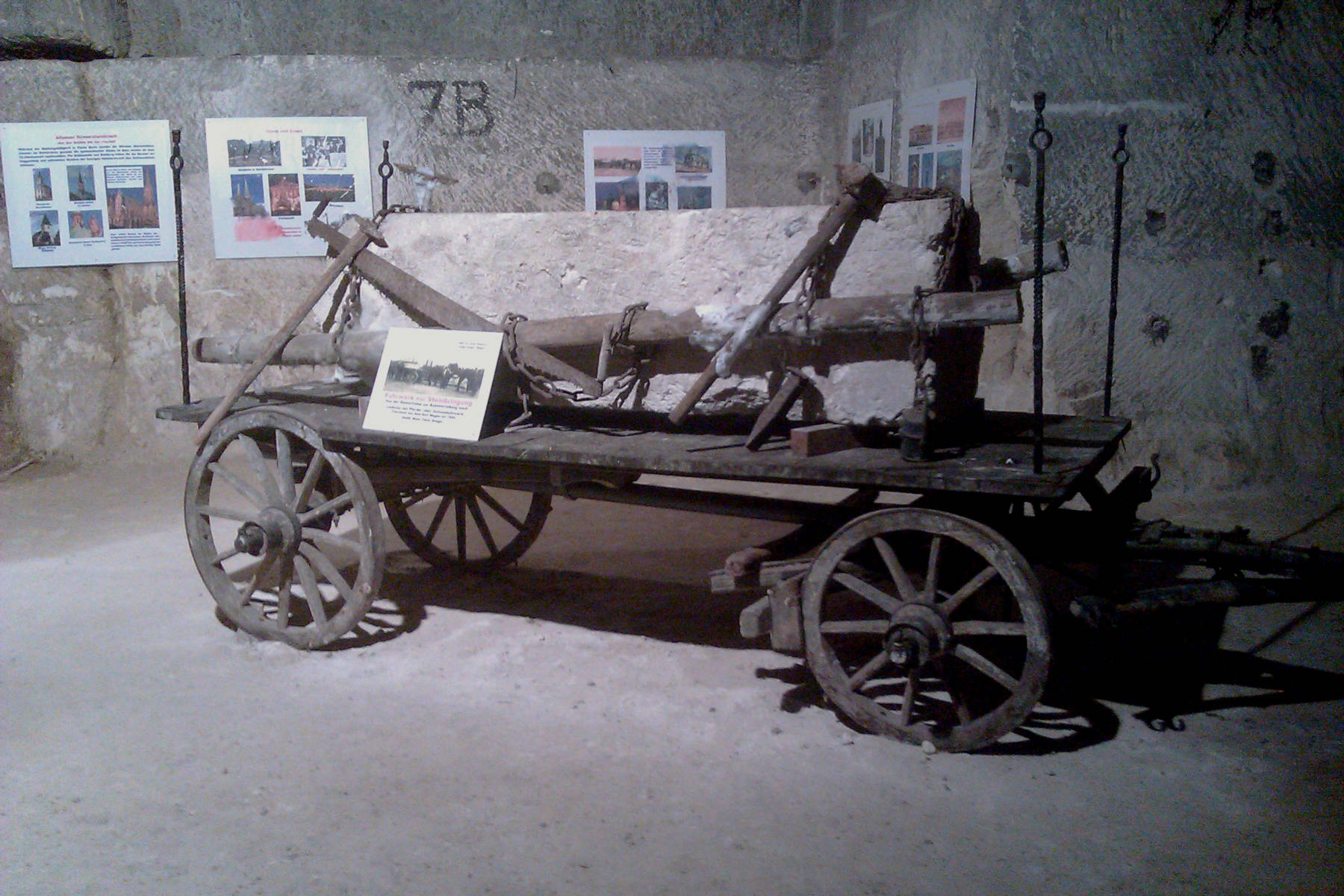
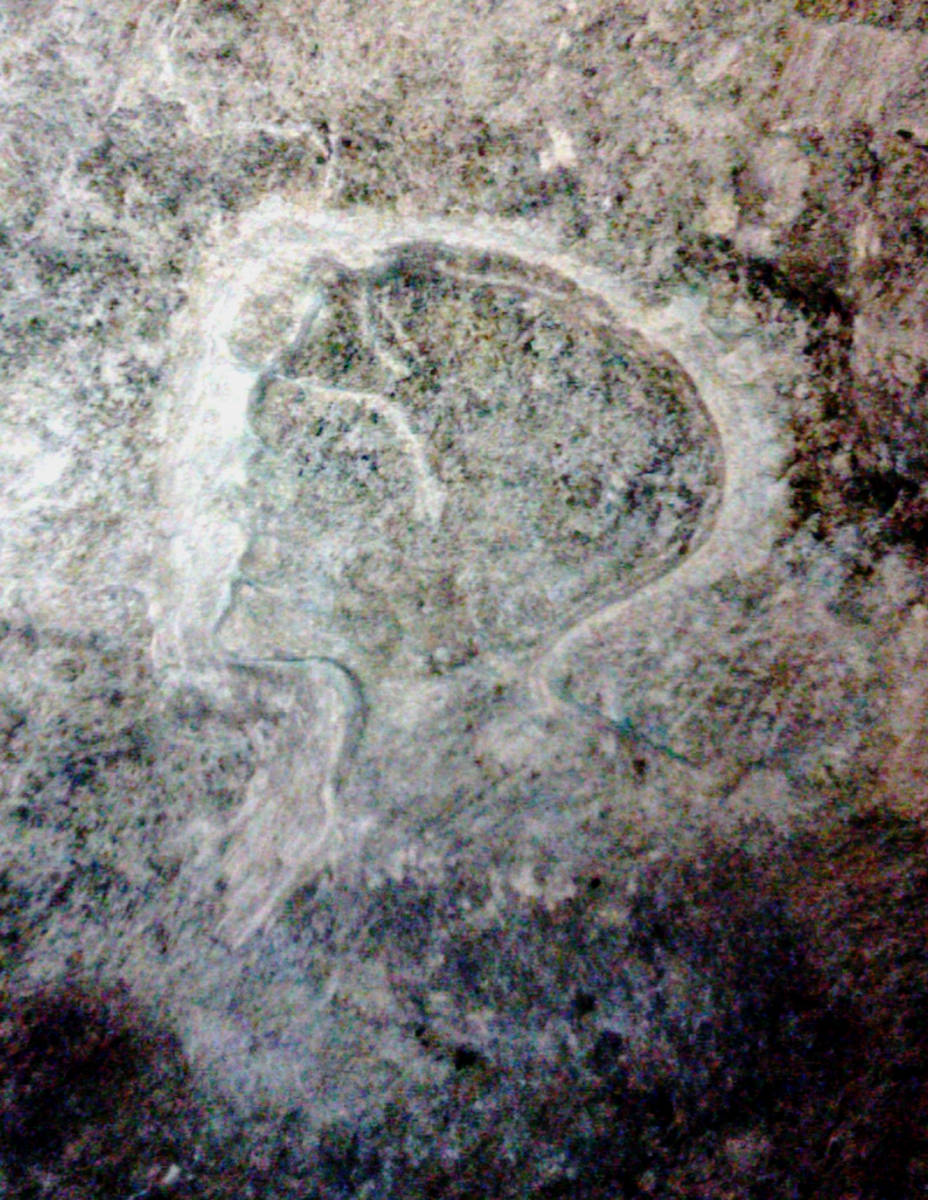
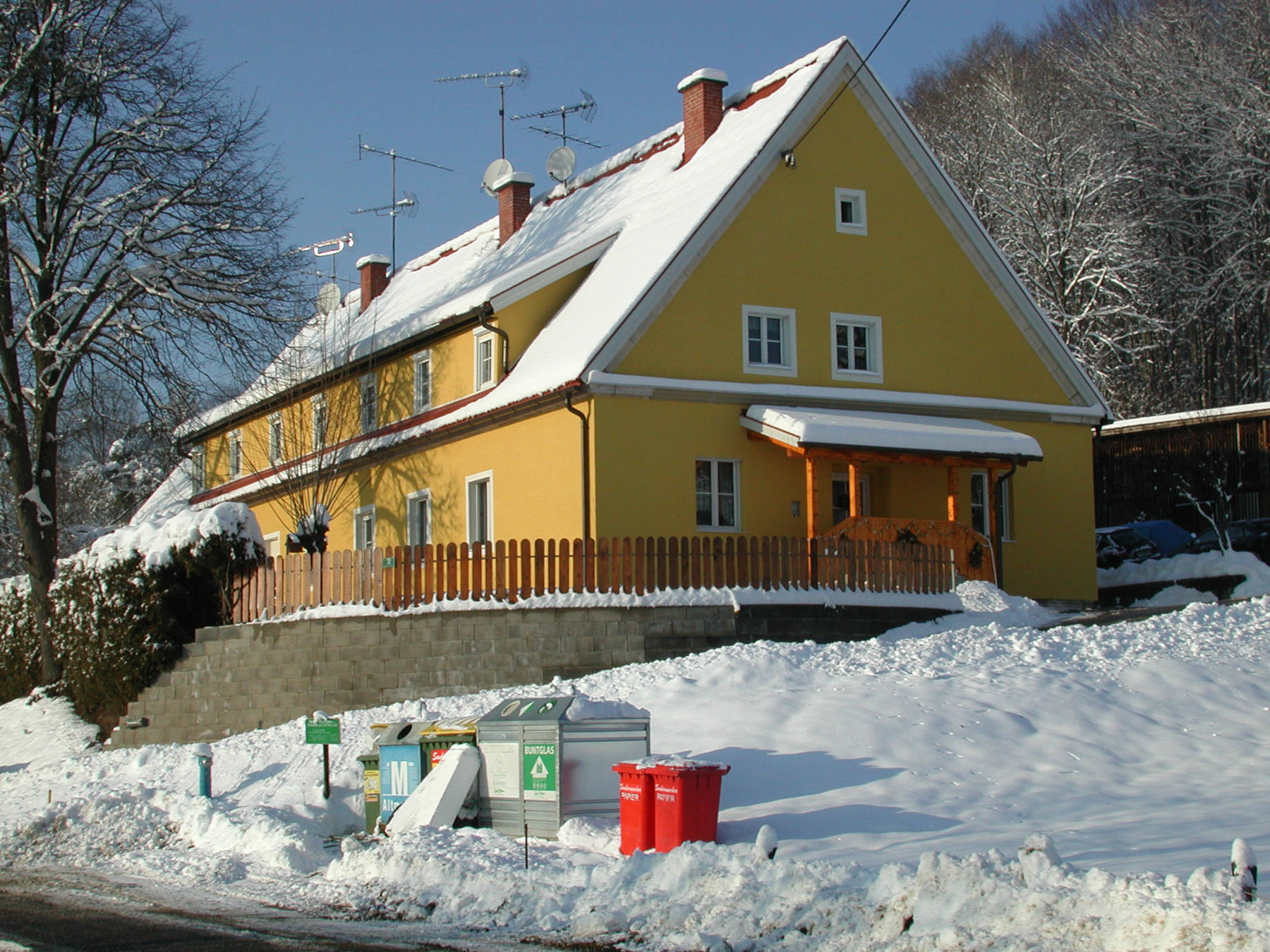
Römerhöhle (Roman Cave) is the colloquial name for the Römersteinbruch Aflenz (Roman Quarry Aflenz), a quarry for calcitic sandstone, known as Aflenzer Stein or Aflenzer Quader. It is actually located in the municipality of Wagna, between Aflenz an der Sulm and Unterlupitscheni. Aflenzer stone is a very good and durable building material that has been quarried since Roman times, and as the quarry is still in operation, it is also known as the oldest mine in Austria that is still active today. In a disused part of the extensive site, there is an exhibition on the geology and history of the quarry. There have been three main phases in its history.
First, the Roman period, when quarrying began. Here you can learn a lot about the building blocks, but in the nearby museum of the Flavia Solva excavation site, 2.5 km to the north, you will find the only Roman town and the most important Roman archaeological site in Styria. The museum is made of glass, so you can see everything from the outside, making it not only accessible but also free of charge. This settlement was founded in 15 BC and elevated to city status in 70 by Emperor Vespasian. Various buildings constructed at that time required a large quantity of building stones, for example the amphitheatre. After the collapse of the Roman Empire, there was no longer any need for building stones for some time.
Quarrying resumed in the Middle Ages, and from the 12th century onwards, stone was primarily needed for the construction of sacred buildings. Only churches, monasteries and castles used stone; ordinary farmers and citizens built in half-timbered style. The stone was valued for its quality and was also transported over long distances. For example, St. Stephen’s Cathedral in Vienna, Graz Castle and the Graz Landhaus were built using Aflenz sandstone.
The end of the Second World War was a very inglorious chapter in history. As Allied air raids increased, war-related production was moved underground as far as possible. This meant that the quarry was also used as an underground factory. A branch of the Thondorf aircraft factory Steyr Daimler Puch was relocated to the mountain. This had to be done very quickly, and so the Aflenz concentration camp was set up as a satellite camp of the Mauthausen concentration camp. The prisoners were used as forced labourers, and over 5,000 people died in the process. Not only were the existing quarries continued to be used, but halls were also built, a pillar structure with a floor area of around 20,000 m². In addition, tunnels were built through the hill to the banks of the Sulm, presumably to facilitate the transport of raw materials and products by ship. However, the blasting measures during construction caused lasting damage to this area, and the tunnels were therefore filled in. After the end of the war, the Allies attempted to destroy all military installations, usually by blowing them up. This was also planned here, but apart from the fact that it is very difficult and costly to destroy a large underground facility, the British occupiers recognised the value of the stone. This was due to the intervention of Univ.Prof.Dr. Alois Kieslinger, who worked for the Austrian Federal Monuments Office. Quarrying resumed, as the stones were needed for the reconstruction of buildings destroyed in the war. After that, however, the quarry was closed down.
Due to the steadily increasing demand for natural stone, the quarry was acquired by the company Stein von Grein in Graz in 1987 and reopened in 1988. Since then, around 200 m³ of calcitic sandstone has been quarried each year. The company specialises in exclusive natural stone for gravestones, kitchen worktops, cladding, window sills and so on. This part of the quarry is not open to visitors.
The show mine known as the Roman Cave or Roman Quarry Aflenz is a museum dedicated to the medieval to modern extraction of building stones. Unfortunately, the Roman quarries were filled in during the Second World War and are not open to visitors. The Friedensstollen (Peace Tunnel) is a memorial to the Aflenz concentration camp. Even though they do not have opening hours, individual travellers can also arrange a guided tour; there is no minimum group size. There is also a kind of concert and theatre hall, which has been used for various events since 1989. Concerts and theatre performances take place there.
 Search DuckDuckGo for "Römerhöhle"
 Google Earth Placemark
 OpenStreetMap
 Römersteinbruch Aflenz - Wikipedia (visited: 22-FEB-2026)
 Wächterhaus und Römersteinbruch (visited: 22-FEB-2026)
 Index
Index Topics
 Hierarchical
 Countries
 Maps
Maps