Museum Montanarum
Useful Information
| Location: |
Altenberger Hof, Altenberg 14, 8691 Neuberg an der Mürz.
From Vienna, take the A2 Südautobahn motorway 55 km, exit 57 Knoten Seebenstein onto 56 Semmering expressway towards Mürzzuschlag 36 km, then exit at Mürzzuschlag Ost. In the city centre, turn right B23 towards Kapellen 6 km, turn right L129 towards Altenberg an der Rax. (47.677387, 15.644630) |
| Open: |
After appointment. [2026] |
| Fee: |
[2026] |
| Classification: |
 Iron Mine Iron Mine
|
| Light: |
 Electric Light Electric Light
|
| Dimension: | L=9,000 m. |
| Guided tours: | |
| Photography: | |
| Accessibility: | |
| Bibliography: | |
| Address: |
Museum Montanarum, Altenberger Hof, Altenberg 14, 8691 Neuberg an der Mürz, Tel: +43-664-3869002, Tel: +43-3857-8321.
E-mail: |
| As far as we know this information was accurate when it was published (see years in brackets), but may have changed since then. Please check rates and details directly with the companies in question if you need more recent info. |
|
History
| 1492 | Mining first mentioned in writing. |
| 1770 | Mining resumed. |
| 1893 | Mine closed. |
Geology
Description
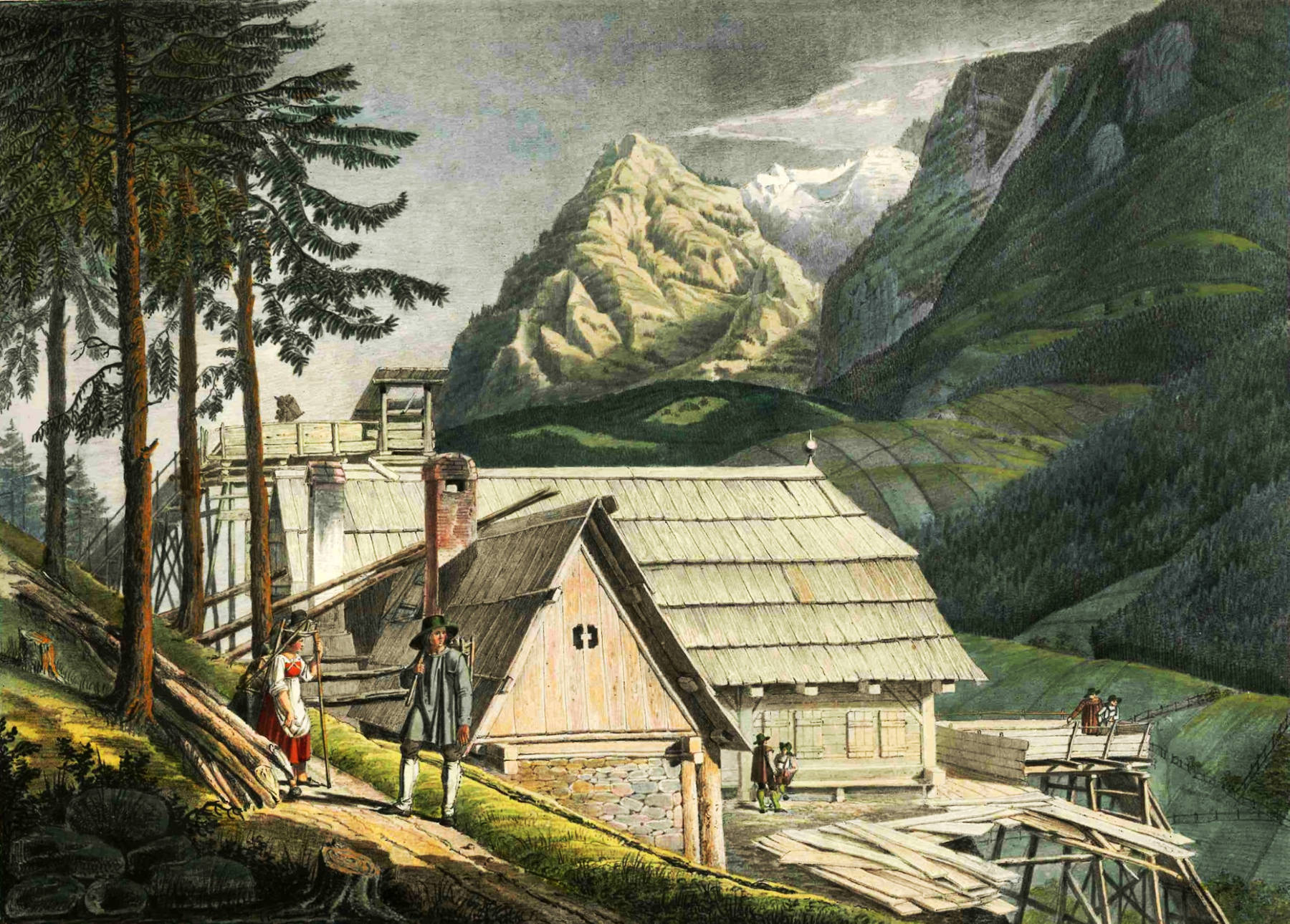
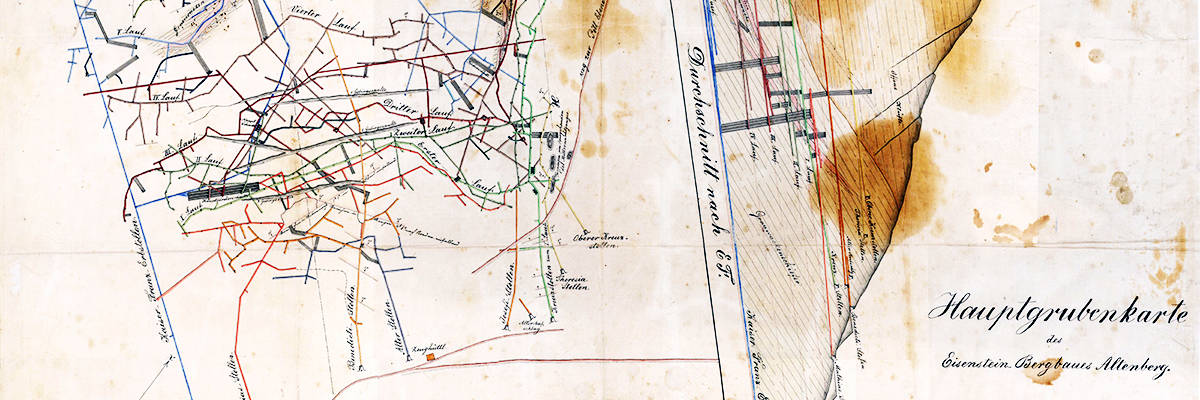
The Museum Montanarum, also known as Bergwerksmuseum Montanarum (Montanarum Mining Museum), in Altenberg is dedicated to the local mining history of the 18th and 19th centuries. Spate iron ore was mined in Altenberg and smelted at the Neuberg ironworks and smelter. The exhibition covers the ore as well as the products made from iron, including anvils and vices for blacksmiths. In addition, the miners' tools and machines are of course presented, such as miner’s lamps, miners' clothing, surveying instruments and historical mine plans. There are also photos and documents. A mineral exhibition is also a must.
The aforementioned heyday of mining is, of course, only part of the story. In 1492, the abbot of Neuberg Abbey received permission from Emperor Frederick III to mine as much iron ore "as was necessary for domestic use". As this was done in writing, it is also the first documented mention of local mining. During this period, mining was mostly carried out above ground in so-called pingen. Once the ore above ground had been exhausted, the miners had to follow the ore vein underground, at that time still using pickaxes and hammers. Mining was soon discontinued and remained dormant for a long time.
Operations resumed around 1770, and modern mining techniques led to a golden age. In the second half of the 19th century, around 180 people worked in the Altenberg mines. The population of the town tripled. Around 9 km of tunnels were dug. After this heyday, the mine was finally closed in 1893 due to "exhaustion of reserves". However, the last Altenberg miners used to say, "When we got to the best ore, we had to stop!" The truth of this remains unknown to this day. But even with large ore reserves, the mine would not be profitable to operate under modern conditions.
In addition to the museum, the Altenberg Mining Trail is also very interesting. At 2 km, it is very short by Austrian standards and is also suitable for less athletic visitors. The history of the Altenberg mine is presented at 23 stations. The so-called telescopes, which are Plexiglas tubes that direct the view to particularly important stations, are quite amusing.
The museum is run by the Friends of the Altenberg Mine Association. It is located in the Landgasthof Altenbergerhof building, and the entrance can be reached from the inner courtyard. It does not have regular opening hours, but the museum’s founder and chairman of the association, Erwin Gruber, also opens the museum for individual travellers.
 Search DuckDuckGo for "Museum Montanarum"
 Google Earth Placemark
 OpenStreetMap
 Museum Montanarum, official website
  (visited: 25-DEC-2025)
 Index
Index Topics
 Hierarchical
 Countries
 Maps
Maps