Teufelshöhle
Devils Cave
Useful Information

| Location: | A3 exit Höchstadt-Ost, A9 exit Pegnitz, A73 exit Forchheim-Süd. Pottenstein lies at the B470 between Forchheim and Pegnitz, 43 km from Forchheim, 10 km from Pegnitz, 40 km N Nürnberg. (58,Mc50) |
| Open: |
Palm Sunday Weekend to early NOV daily 9-17, last tour 16:30. NOV to Palm Sunday Weekend Sun 11-15, tours at 11, 12:20, 13:40, 15. Closed 24-DEC, 25-DEC. [2014] |
| Fee: |
Adults EUR 4.50, Children (4-15) EUR 2.50, Families (2+2) EUR 12. Groups (15+): Adults EUR 3.80, Children (4-15) EUR 2. Reductions with Erlebnispaß and Kurkarte. [2014] |
| Classification: |
 Karst Cave Karst Cave
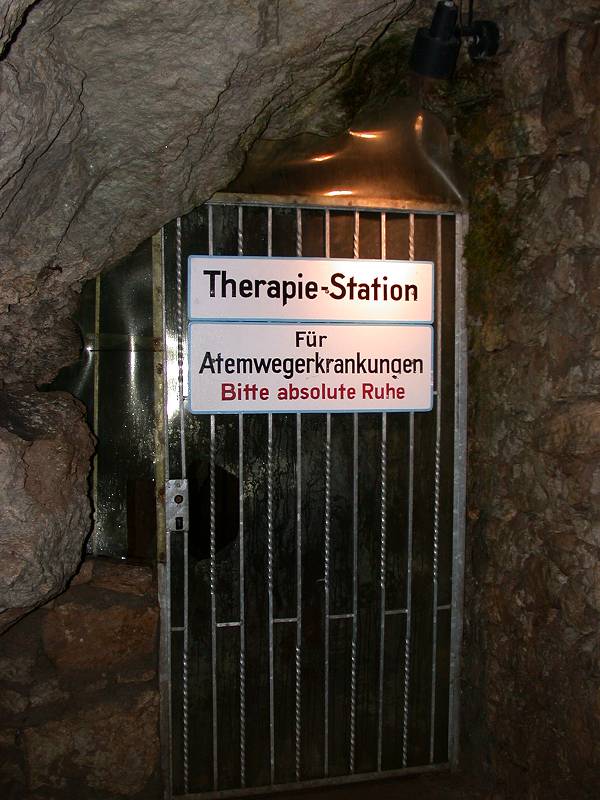
 Speleotherapy Speleotherapy
|
| Light: |
 Incandescent
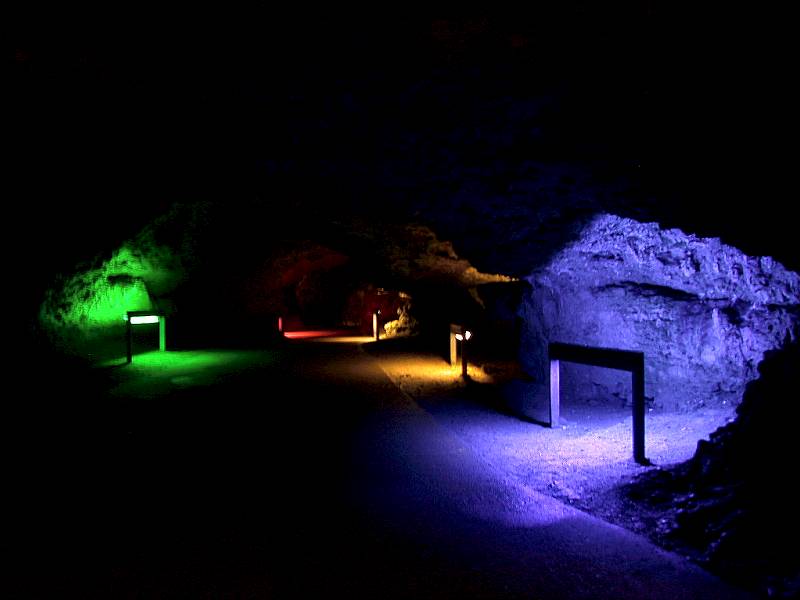
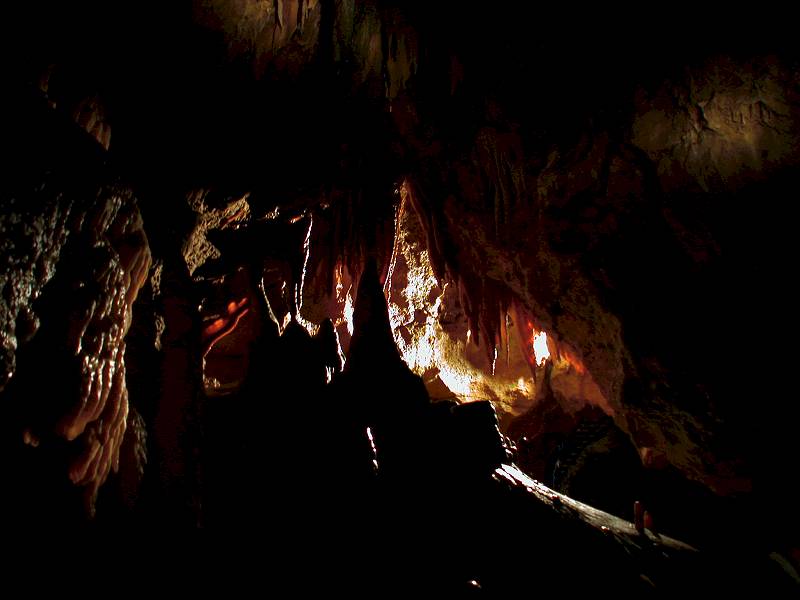
Coloured Light Incandescent
Coloured Light
|
| Dimension: |
L=4,000 m.
GR: L=60 m, B=18 m, H=15 m. Portal: H=14 m, W=25 m. |
| Guided tours: |
L=1,500 m, D=45 min. V=200,000/a [2000]. V=160,000/a [2005]. |
| Photography: | Allowed, no tripod, no flash, private use only |
| Accessibility: | Narrow passages and staircases, not accessible. |
| Bibliography: |
A. Sieghardt (1964):
Teufelshöhle Pottenstein,
Bayreuth
( ) )
|
| Address: | Zweckverband Teufelshöhle, Forchheimer Straße 1, 91278 Pottenstein, Tel: +49-9243-208, Fax: +49-9243-7018840. |
| As far as we know this information was accurate when it was published (see years in brackets), but may have changed since then. Please check rates and details directly with the companies in question if you need more recent info. |
|
History
| 1901 | first survey by Albert Neischl. |
| 1922 | discovery of new parts by Hans Brand. |
| 1922 bis 1931 | development as an show cave and electric light installed. |
| 1949 | discovery of diluvial animal bones by Georg Brunner in a cleft. |
Description

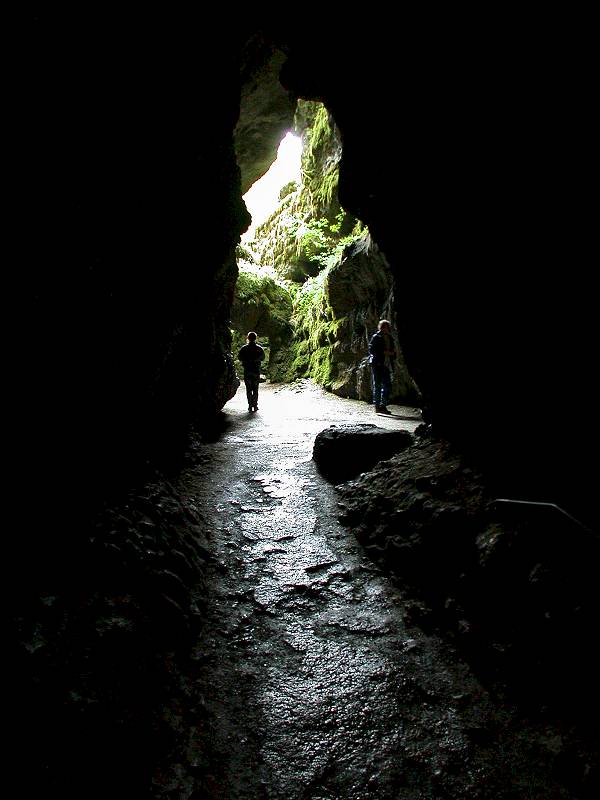
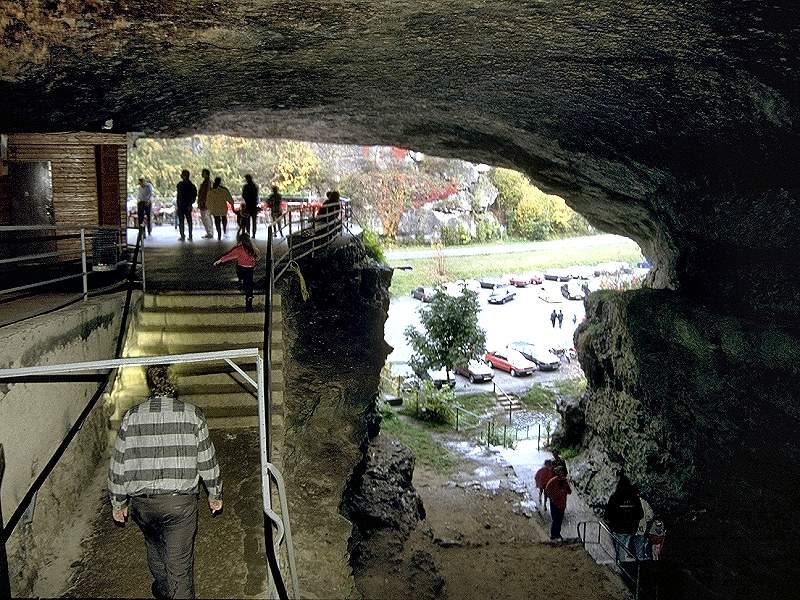
The impressive 13 m wide, 11 m high and 80 m deep portal in the cliffs of the Weiherbachtal (Weiherbach valley) is known for a very long time. It was called Teufelsloch (Devils hole) by the locals. Only about 100 m were accessible at this time. The discovery of new parts increased the cave length to 1,500 m.
The cave entrance has been known for a long time, and numerous visitors from near and far have visited the beautiful site. By the end of the 19th century, the cave was completely destroyed, no dripstones remained and the bones in the cave sediments were almost completely removed.
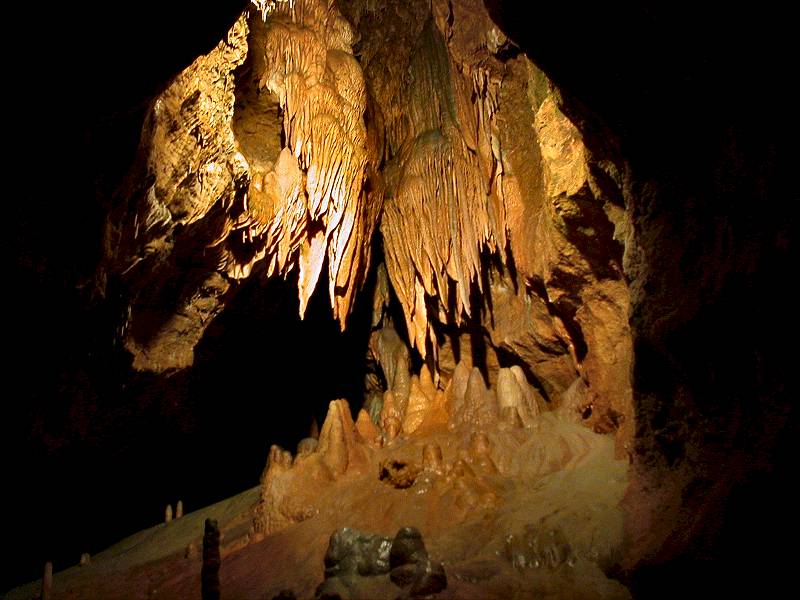
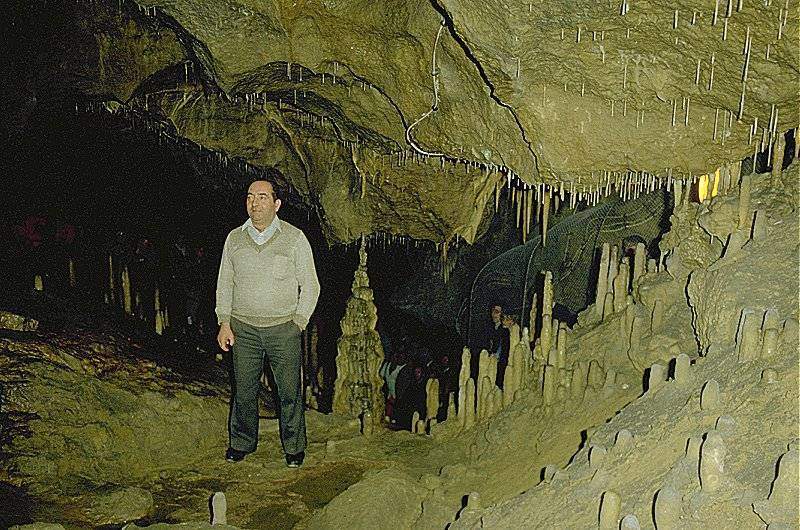
The show cave of today was discovered 1922 by Hans Brand behind the long known entrance. The new parts contained several huge halls with beautiful speleothems and numerous bones. Most of the bones were from cave bears (Ursus spelaeus). The paleontologist Max Schlosser reconstructed the skeleton of a cave bear, which is now on display in the cave. Remains of human origin were not found.
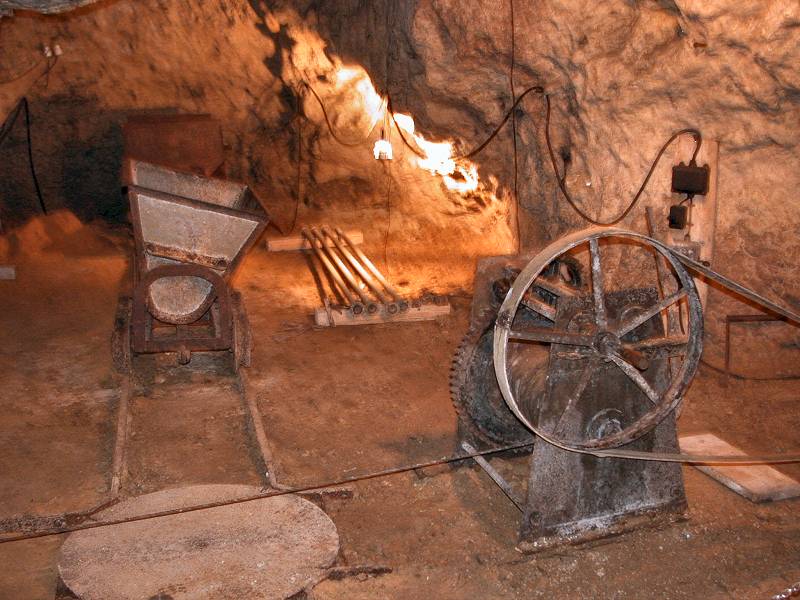
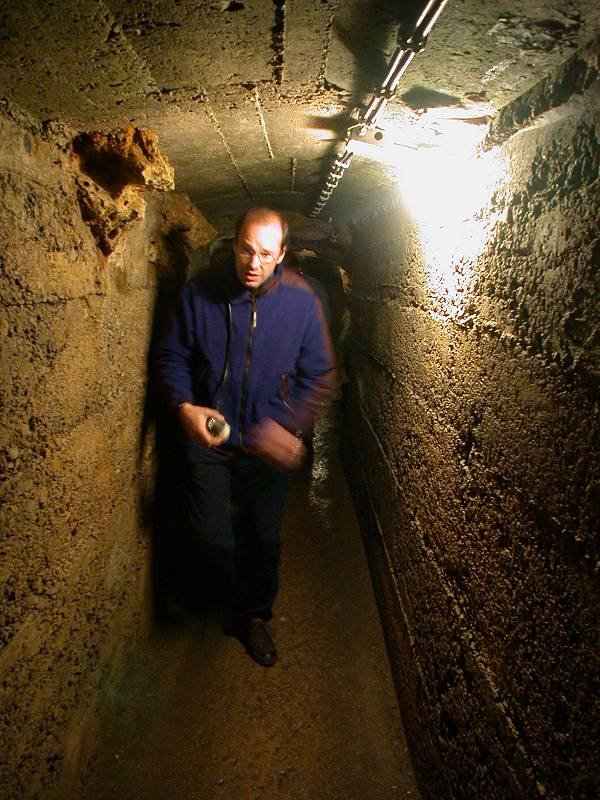
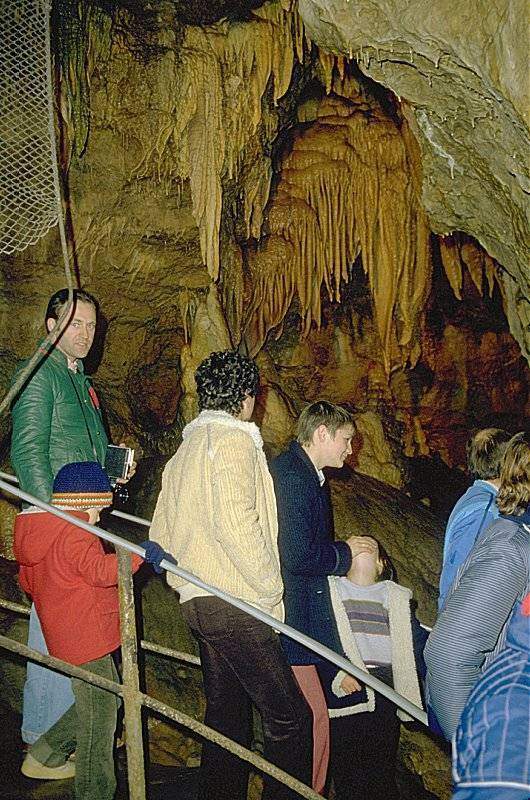
After the discovery, Hans Brand developed the cave as a show cave, which meant an enormous amount of work. The character of the cave is typical for the local dolomite karst: huge chambers and narrow connections. In order to connect the halls with paths of suitable size, numerous tunnels were driven into the rock. The result is the longest cave tour in Germany, about 1,500 m long, with about half of the distance being artificial tunnels. In the first chamber of the tour, there is a small exhibition of mining machinery used to develop the cave, including mining carts and drills.
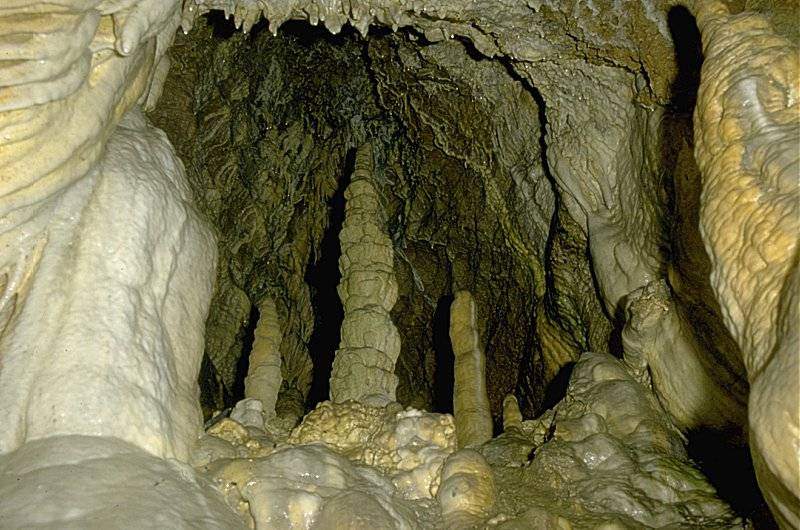
The biggest chamber is called Riesensaal (Giants chamber) with a length of 30 m and a width of 16 m. The most interesting stalagmites are the Barbarossa and the crucifixion, three larger stalagmites surrounded by smaller ones, symbolizing the attendants.
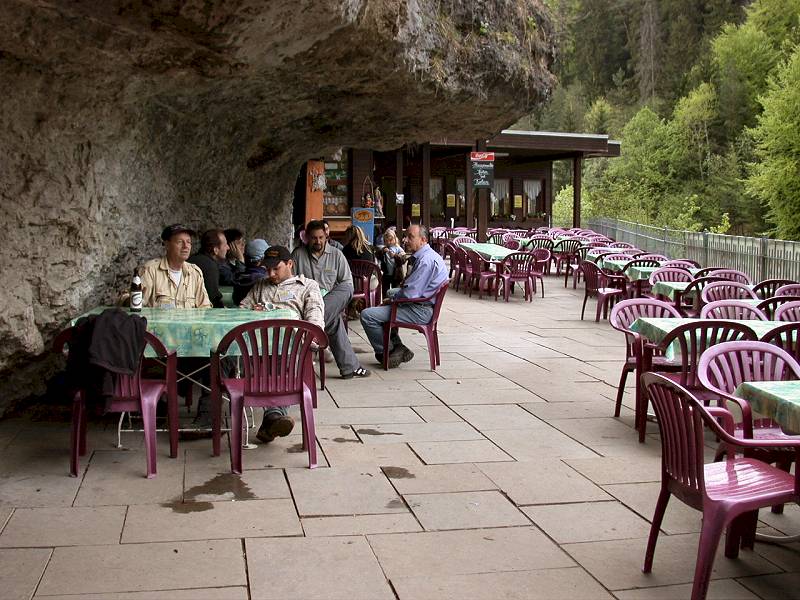
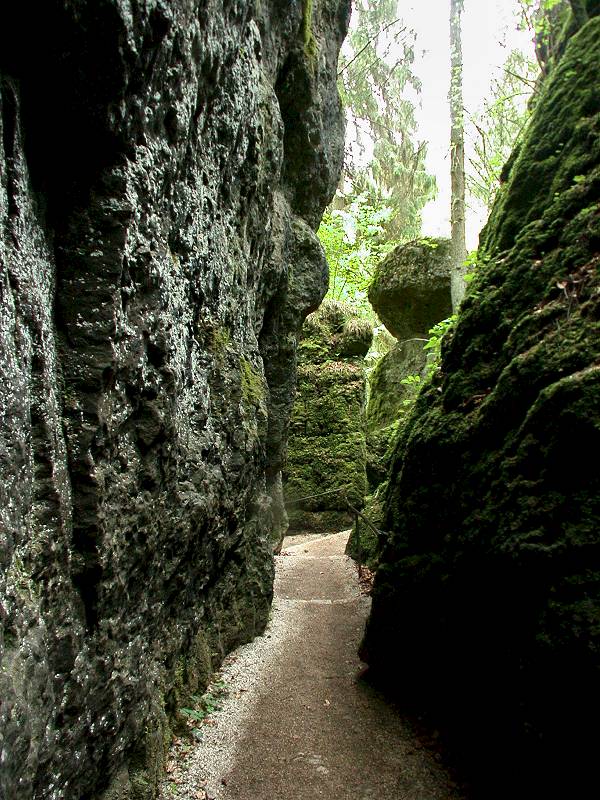
But the biggest sight of the cave is outside and freely accessible. The portal of the cave, the cave café, numerous small caves and abris (shelters) in the surroundings, and the cave exit itself. From the cave exit the path leads through a labyrinth of strange looking rocks back to the cave entrance.
|
|
| Teufelshöhle Gallery |
- See also
 Search Google for "Teufelshöhle Pottenstein"
 Google Earth Placemark
 Teufelshöhle Pottenstein, official website. ()
- A labyrinth awaits in Germany’s Devil’s Cave : Travel General
- Info Center: Germany for the Youth - Sport, Leisure & Adventure (visited: 26-FEB-2011)
- Die Teufelshöhle bei Pottenstein, Fränkische Schweiz (visited: 28-JUL-2011) by Franz Lindenmayr. ()
- Teufelshöhle Pottenstein in postcards. ()
 Index
Index Topics
 Hierarchical
 Countries
 Maps
Maps Search