Olgahöhle
Olga’s Cave
Useful Information
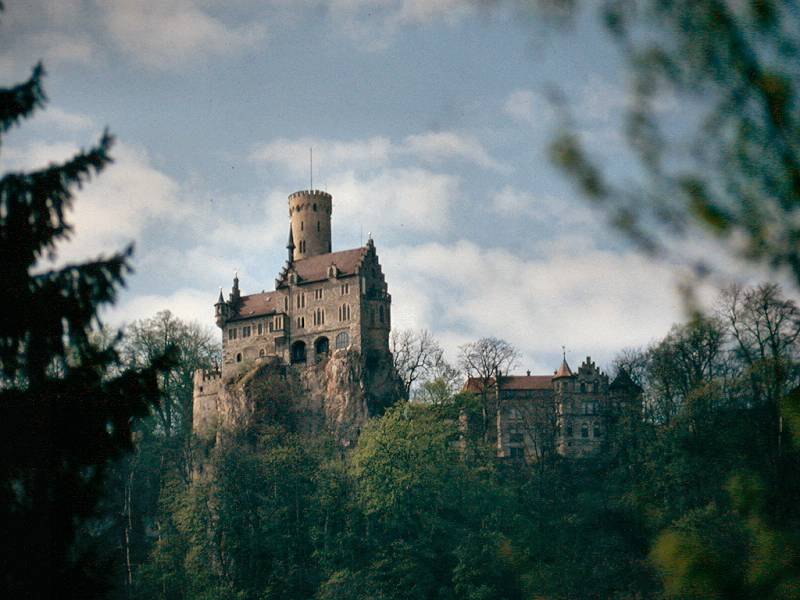
| Location: | In Honau at ther B313/312, 10 km south of Reutlingen. |
| Open: |
APR to OCT 1st Sun in the month, Hol 10-17. [2014] |
| Fee: |
Adults EUR 3, Children (6-14) EUR 1.50, Children (0-5) free, SAV-Members EUR 2.50, Family EUR 7. Groups (11+): Adults EUR 2.50, Children (6-14) EUR 1. [2014] |
| Classification: |
 tufa cave,
primary cave,
horizontal cave. tufa cave,
primary cave,
horizontal cave.
|
| Light: |
 Electric Light Electric Light
|
| Dimension: | L=170 m, D=10 m, A=557 m asl |
| Guided tours: | D=10 min. |
| Photography: | |
| Accessibility: | |
| Bibliography: |
Schmid, Stirn, Ziegler, Schriftleiter: Hans Binder (1972):
Die Olgahöhle in Honau,
Abh. Karst- u. Höhlenkunde, Reihe A, Heft 7, München 1972.
(available as an offprint).
( ) )
|
| Address: |
Schwäbischer Albverein, Ortsgruppe Honau, Herr Saur.
E-mail: |
| As far as we know this information was accurate when it was published (see years in brackets), but may have changed since then. Please check rates and details directly with the companies in question if you need more recent info. |
|
History
| 24-OCT-1874 | discovered by Johann Ziegler during quarry works. |
| 1875 | entrance and paths built, lighting by candles. |
| 17-MAY-1875 | opened to the public. |
| 1884 | electric light. |
| 1891 | second entrance built. |
| 1939 | declared a Natural Monument. |
| 1968 | the area with the hotel and the cave bought by the Wesleyan Church. |
| 1972 | reopening with refurbished electric light. |
| 1985 | start of management by the Schwäbischer Albverein, Ortsgruppe Honau. |
Description
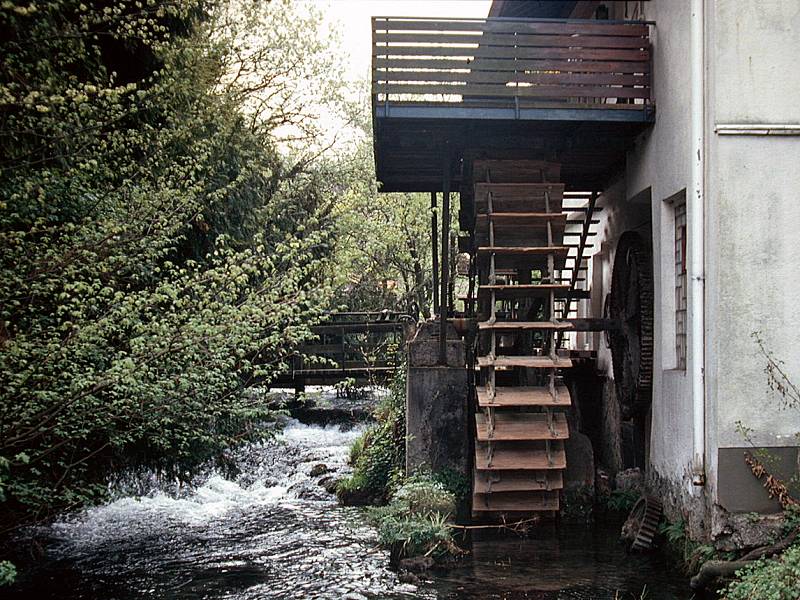
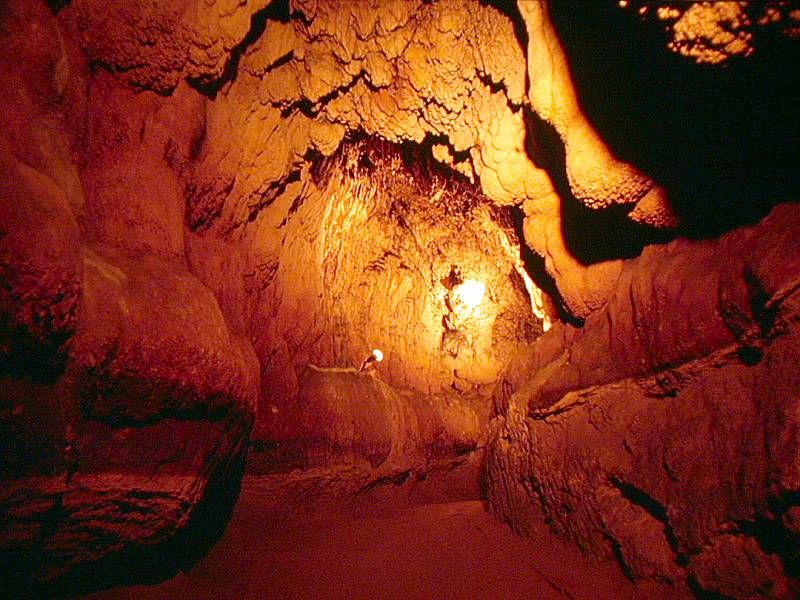
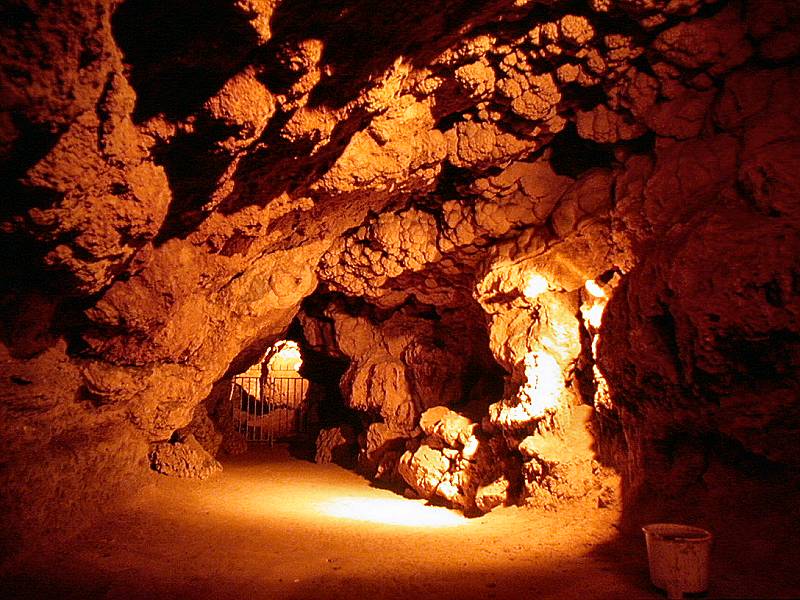
The Olgahöhle is the first cave with electric light in Germany. There is only one cave worldwide, which had elecric light earlier, the Kraushöhle near Bad Gams in Styria (Austria). The electricity was produced by a water wheel at the Echaz river. It is only a few steps from the cave entrance and may still be visited.
The cave was named after Queen Olga von Württemberg. The written authorization was on exhibit for decades at the cave entrance, until is was removed during the 1930s.
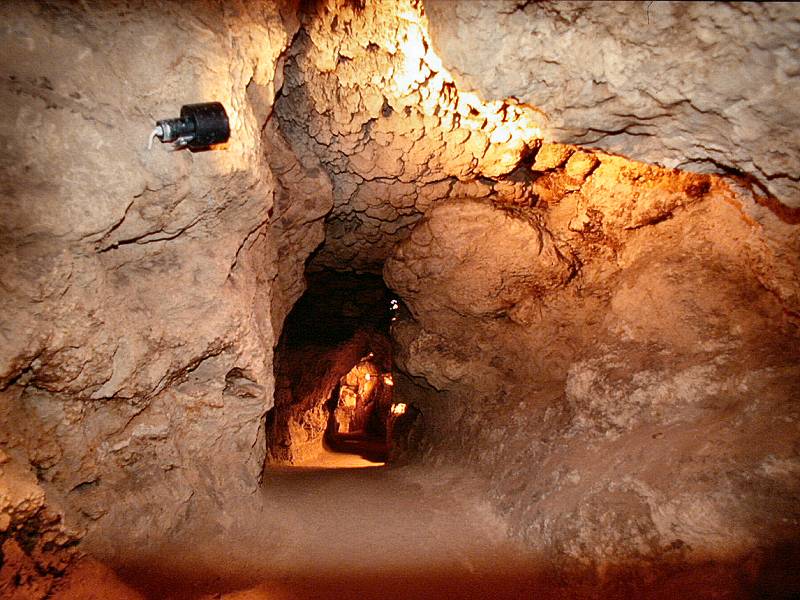
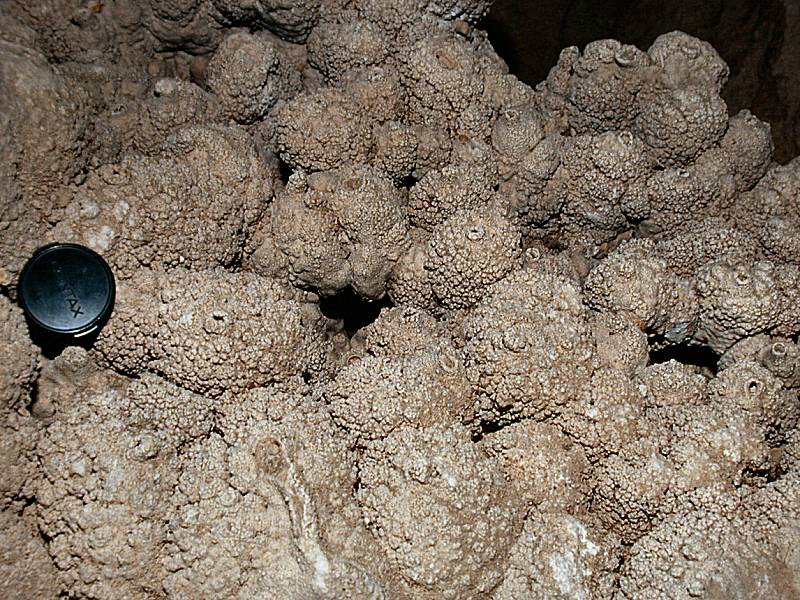
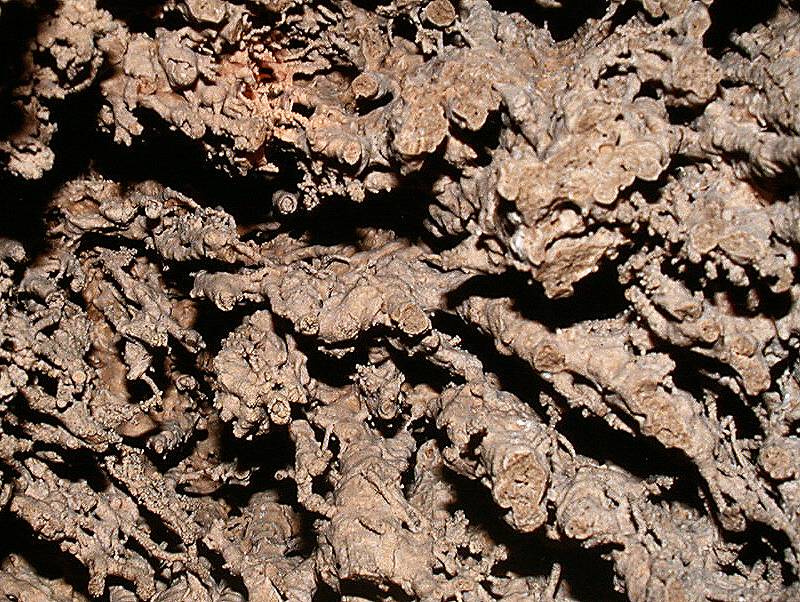
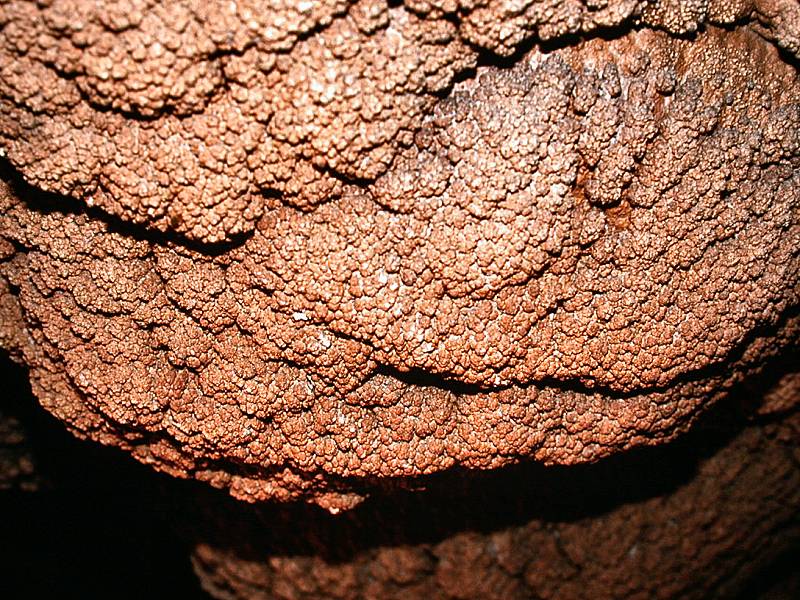
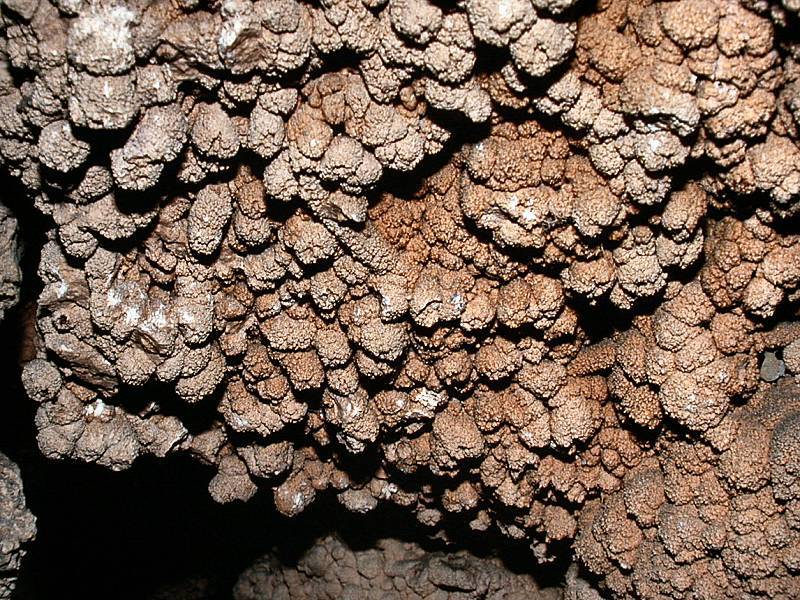
The Olgahöhle is a
tufa cave, which is a rather rare
primary cave.
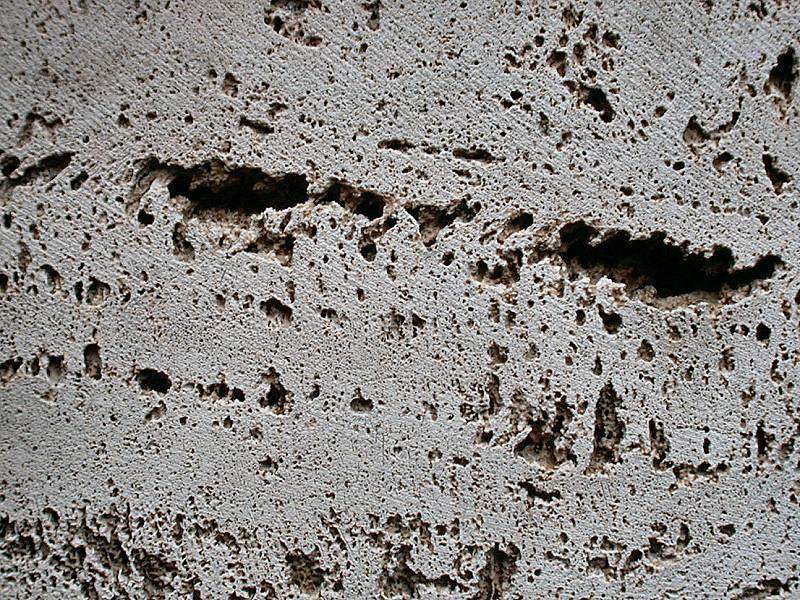
The cave was discovered during the quarrying of the thick layer of tufa. This limestone was formed by the hard water of the Echaz, which flows through Honau until today. The tufa deposit covers an area of 18 ha and forms a step in the valley, called Hohe Au (High Pasture). The village Honau was built on this rock. The quarrying produced rocks for houses, with very unique characteristics: it was mines with saws, as it is very soft when moist. Later it dried, became hard and lightweight, and with its numerous holes it was a very good insulator. But the mining was abandoned at the begin of the 20th century.
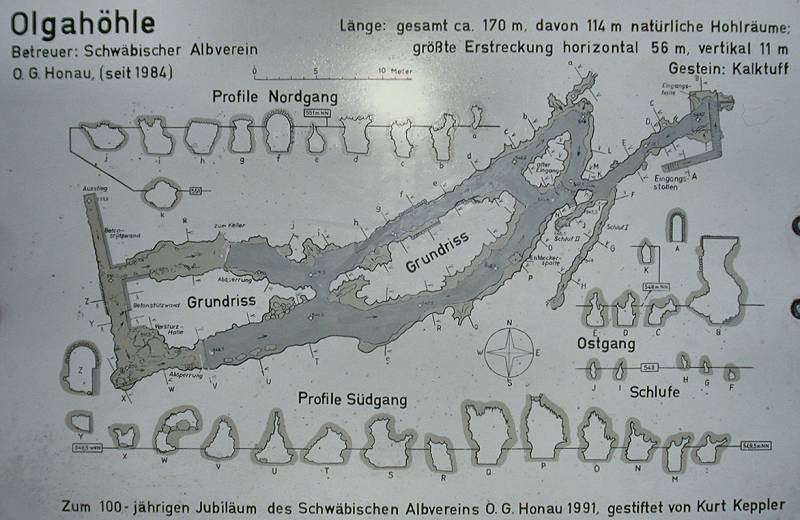
The way the cave formed is easy to understand inside the cave. Two parallel branches run across the valley, and were formed subsequently.
At this time a waterfall, at least 80 m wide and about 10 m high ran across the valley. This waterfall formed its own step, by depositing limestone at the rim. The rim became more and more overhanging. Either by growing from the floor to the overhang, or by parts of the overhang collapsing, this step was coverd by a parallel wall of tufa. This wall enclosed a 80 m long passage, still with some openings to the front.
In a second stage the same thing happened again, a few meters down the valley. Now the few openings just connected the two branches and the cave was not longer open, until it was discovered by qarrying.
|
| Olgahöhle Gallery |
 First Caves with Electric Light
 Search DuckDuckGo for "Olgahöhle"
 Google Earth Placemark
 Olgahöhle - Wikipedia (visited: 09-JAN-2012) (
 Home (visited: 09-AUG-2014), official website. (
 Index
Index Topics
 Hierarchical
 Countries
 Maps
Maps