Wasserfall Dreimühlen
Dreimühlen Waterfall
Useful Information
| Location: | 1 km south of Ahhütte, near Nohn, near Gerolstein. |
| Open: |
no restrictions. [2006] |
| Fee: |
free. [2006] |
| Classification: |
 Tufa Deposits Tufa Deposits
|
| Light: | n/a |
| Dimension: | |
| Guided tours: | |
| Photography: | |
| Accessibility: | |
| Bibliography: |
Wilhem Meyer (1983):
Geologischer Wanderführer der Eifel,
Franckh-Kosmos-Verl. Stuttg. 1983
( ) )
|
| Address: | |
| As far as we know this information was accurate when it was published (see years in brackets), but may have changed since then. Please check rates and details directly with the companies in question if you need more recent info. |
|
History
| 1910 | created with the construction of the railroad. |
| 1938 | declared a Naturdenkmal (Natural Monument). |
Description
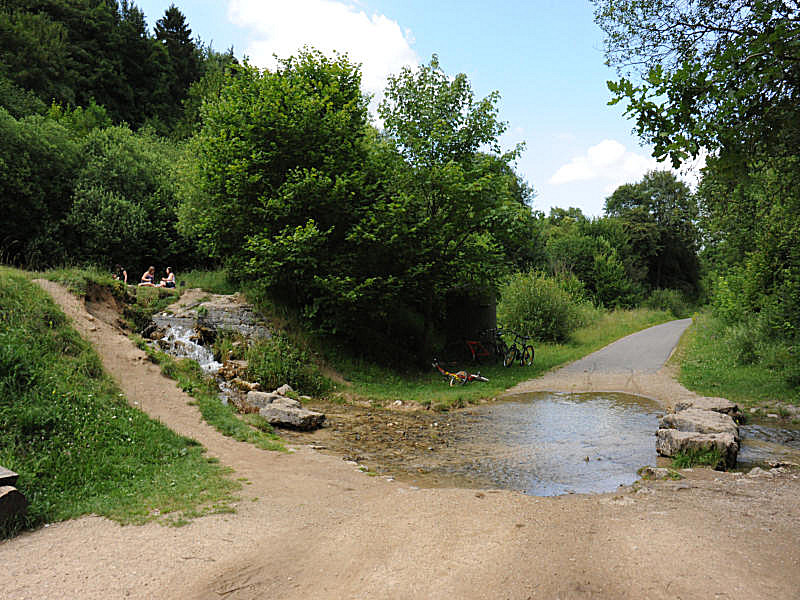
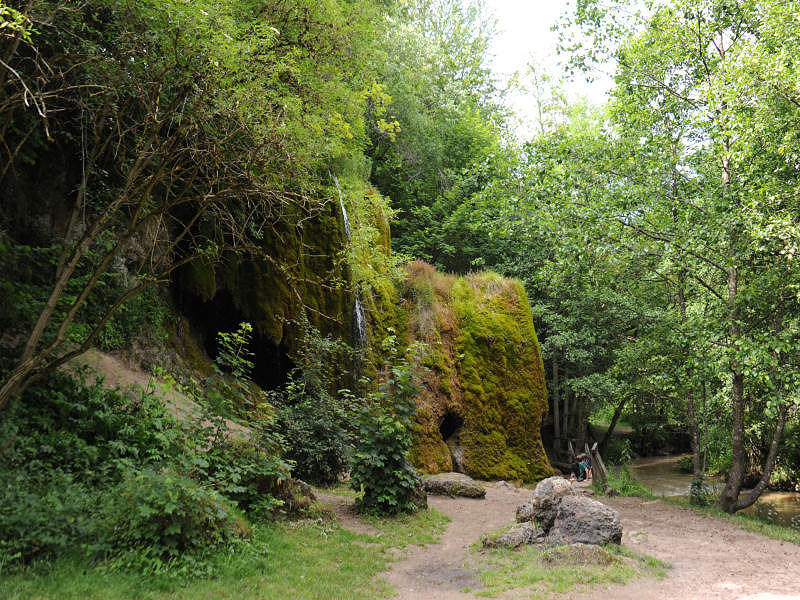
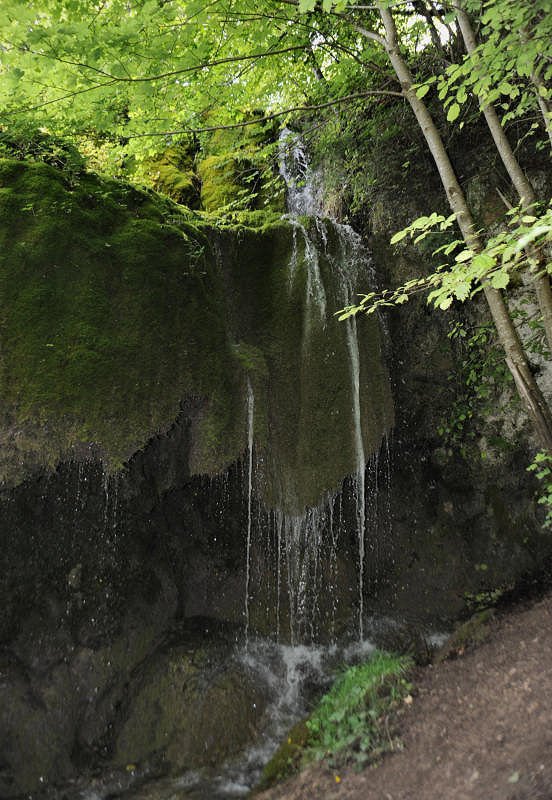
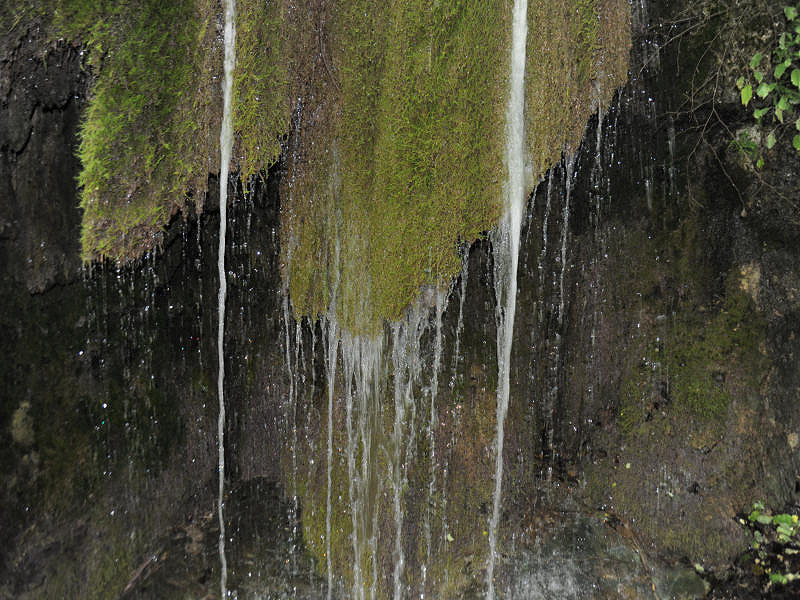
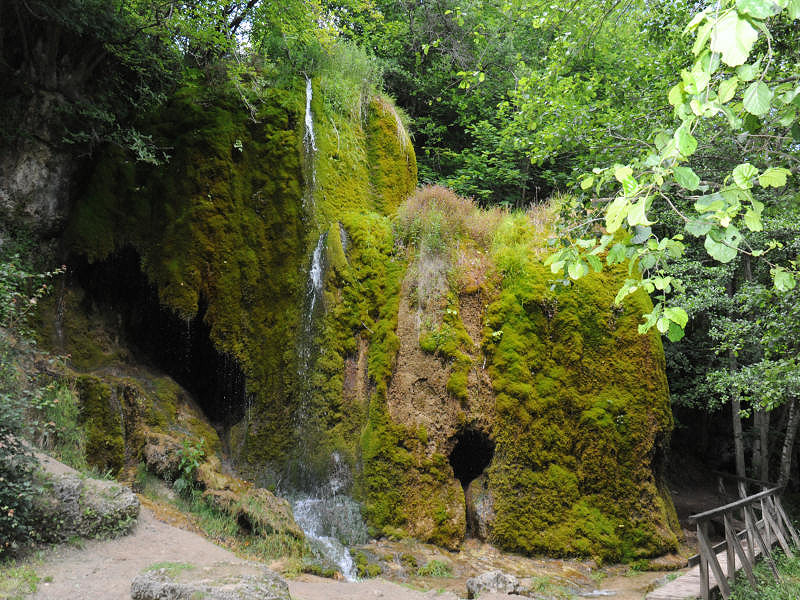
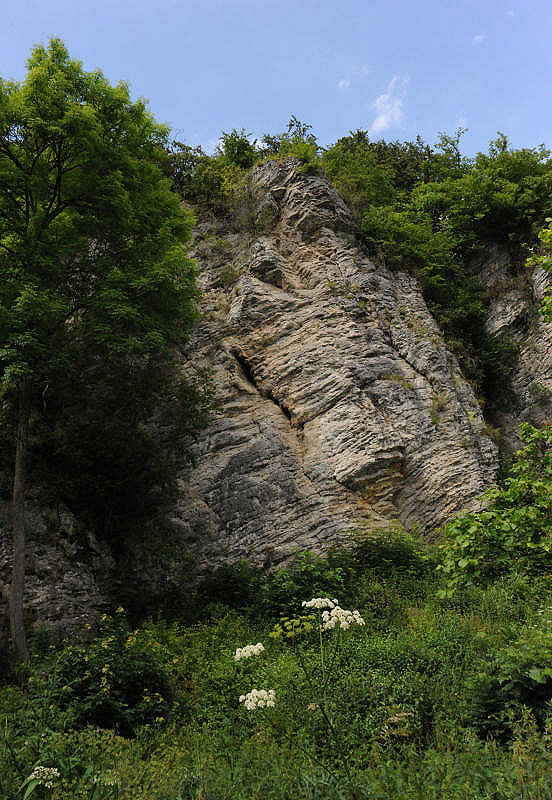
In the Ahbachtal (Ahbach valley) an extraordinary sight is to find, which does not seem very special at the first glimps. A rather small waterfall, falling down a twelve metre long and five metre high limestone cliff. What looks really natural and not special at all is an extraordinary technical monument. It does not look artificial, at the fact that it was declared a natural monument more than 70 years ago confuses the whole story even more. It definitely is an artificial waterfall, constructed together with the railroad line in the year 1910. Numerous brooks and two rivulets where united and chanelled around the dam and the tracks, to protect the railroad.
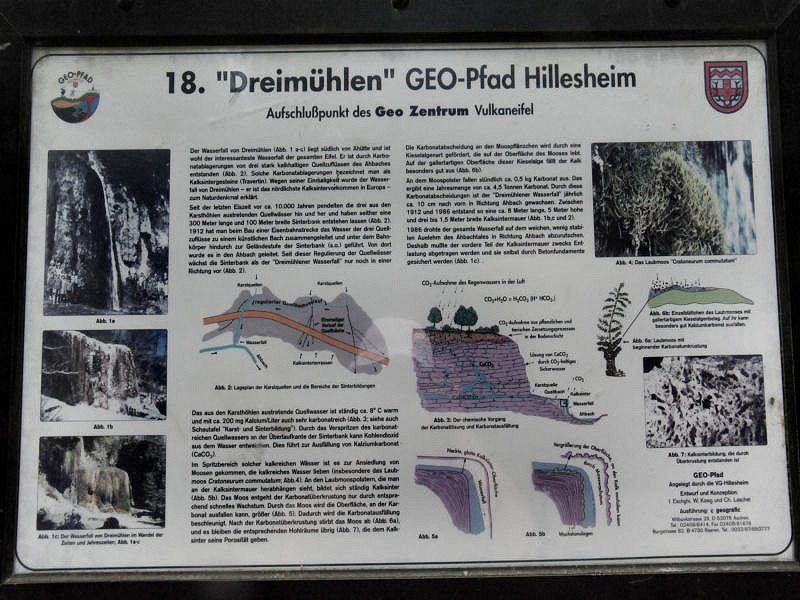
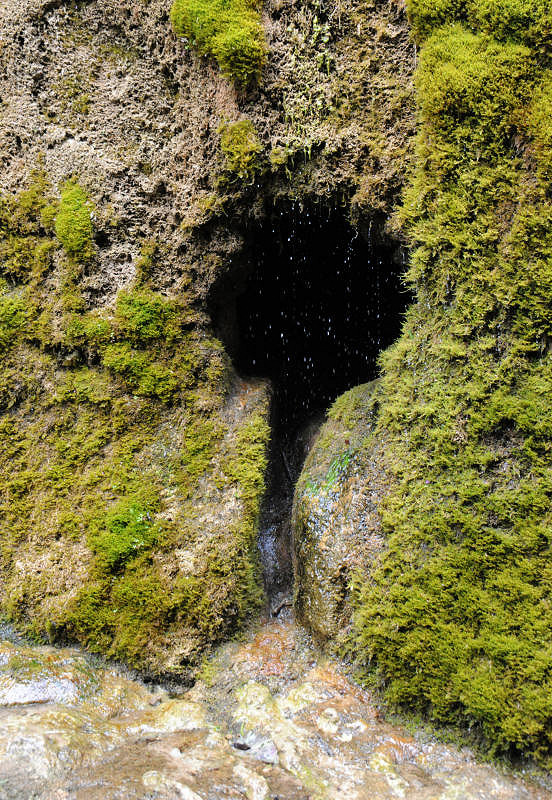
But lets start at the beginning. The limestone of this area, the Kalkeifel (limestone Eifel) is karstified, although there are almost no known caves. The solution of limestone makes the water hard and deposit a lot of limestone around the springs of the area. This limestone is called tufa because of its numerous holes, or sometimes travertine. The carbon dioxide in the water vanishes into the air or is consumed by the algae and moss growing in the water. Thus the limestone is deposited and forms crusts which cover the plants in the water. The plants die and rot, and the typical holes in the tufa remain. There is a huge layer of tufa in the Ahbachtal, where water springs along the slope over some distance. The nearby ruined castle Dreimühlen was built on top of this tufa hill.
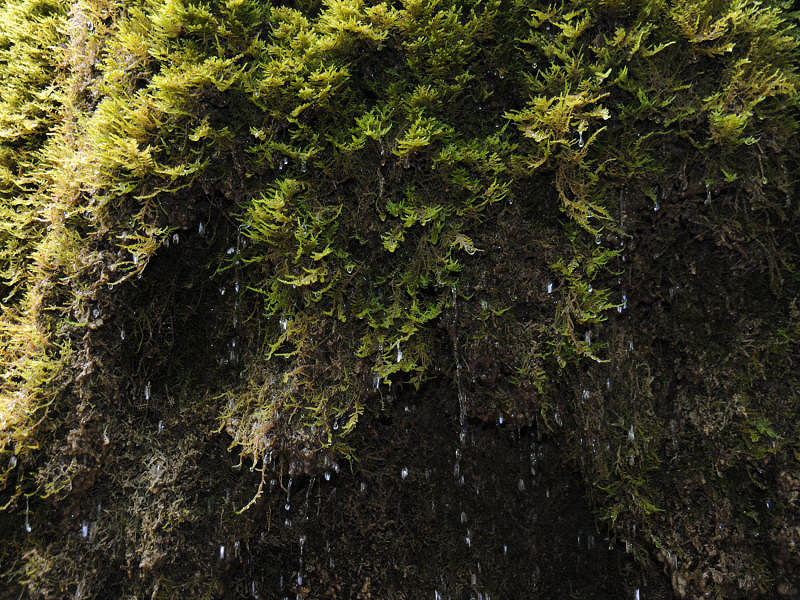
When the railroad was built, it was necessary to protect the dam from the water, which could cause damages by flooding or freezing. All springs were subsumed by a chanel and lead across the dam through an adit and into the Ahbach. At one point there was an also artificial drop, the water was falling down. Wher the water flows faster, the surface becomes bigger, the amount of carbon dioxid vanishing into the air increases and also the amount of deposited limestone. And soon the wall was coverd by a continually growing deposit of tufa, which gave it an absolutely natural look. In 1938 it was declared a Naturdenkmal (natural monument) as the deposition of the limestone definitely is a natural process, even if the step is artificial.
Such waterfalls and their growing tufa are typical for limestone karst areas. But the artificial reason for the process and the extreme speed of an geologic process make it special.
|
| Wasserfall Dreimühlen Gallery |
 Search Google for "Dreimühlen Waterfall"
 Nohner Wasserfall (
 Index
Index Topics
 Hierarchical
 Countries
 Maps
Maps Search