Βραξωσκεπη Ασπροχαλικο
Brachoskepi Asprochaliko - Rockshelter Asprochaliko
Παλαιολιθικο Σπηλαιο Ασπροχαλικου
Palaiolithiko Spilaio Asprochaliko - Paleolothic Cave Asprochaliko
Useful Information
| Location: |
Near Aghios Georghios.
At the national road 5 (E951) between Ioannina and Artá, 12 km north of Filipiáda.
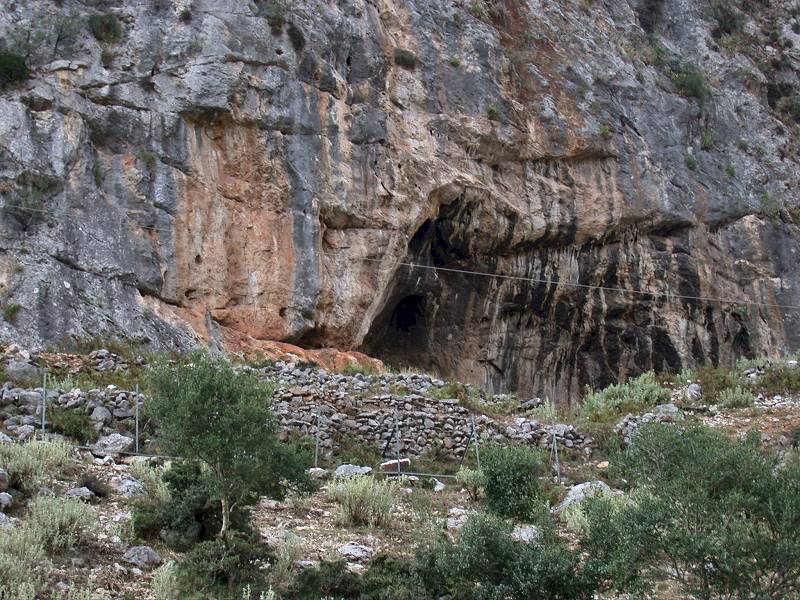
About 20 m above the road at the foot of an overhanging cliff.
Parking on the other side of the road along the road.
Brown signs at the cave.
(39.280518, 20.843213) |
| Open: | no restrictions. Cave itself closed by a fence. |
| Fee: | none |
| Classification: |
 Karst Cave Karst Cave
 Rock Shelter Rock Shelter
|
| Light: | n/a |
| Dimension: | W=25 m, L=5 m, VR=20 m. |
| Guided tours: | n/a |
| Photography: | allowed |
| Accessibility: | no |
| Bibliography: |
G. N. Bailey, C. Gamble and H. Higgs (1983): Asprochaliko and Kastritsa: Further Investigations of Palaeolithic Settlement and Economy in Epirus (Northwest Greece), Proceedings of the Prehistoric Society 49 (1983) 15-42. E. S. Higgs (1966): Excavations at the Rock Shelter of Asprochalico Αρχαιολογικόν Δελτίον, 1966, Τόμος 21, Χρονικά/Μέρος Β’2, 292-294. pdf Stefanos Ligkovanlis (2016): On lithic technology terms and semantics. The example of the Asprochaliko Rockshelter Middle Palaeolithic stone industry, In: Lithics Past and Present, Perspectives on Chipped Stone Studies in Greece (pp.95-110). Studies in Mediterranean Archaeology Vol. CXLIV, Chapter: 7, Astroms Forlag. researchgate |
| Address: |
Asprochaliko Rockshelter, 48200 Agios Georgios, Preveza, Tel: +30-26820-89890.
E-mail: |
| As far as we know this information was accurate when it was published (see years in brackets), but may have changed since then. Please check rates and details directly with the companies in question if you need more recent info. |
|
History
| 1964-1966 | excavated by the British School of Archaeology under the direction of E.S. Higgs. |
Description
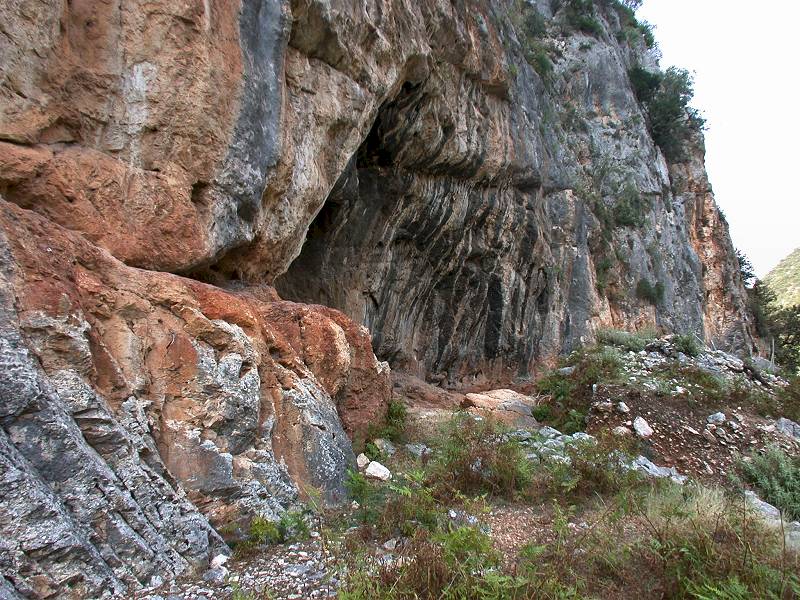
This rock shelter Ασπροχάλικο (Asprochaliko) was in use by Stone Age man from 100,000 years ago to 10,000 years ago. It is supposed, the people followed herds of red deer and wild goat in their seasonal mirgrations between the coast and the hinterland. So they used this shelter only during spring and autumn for a short time, when they crossed this area.
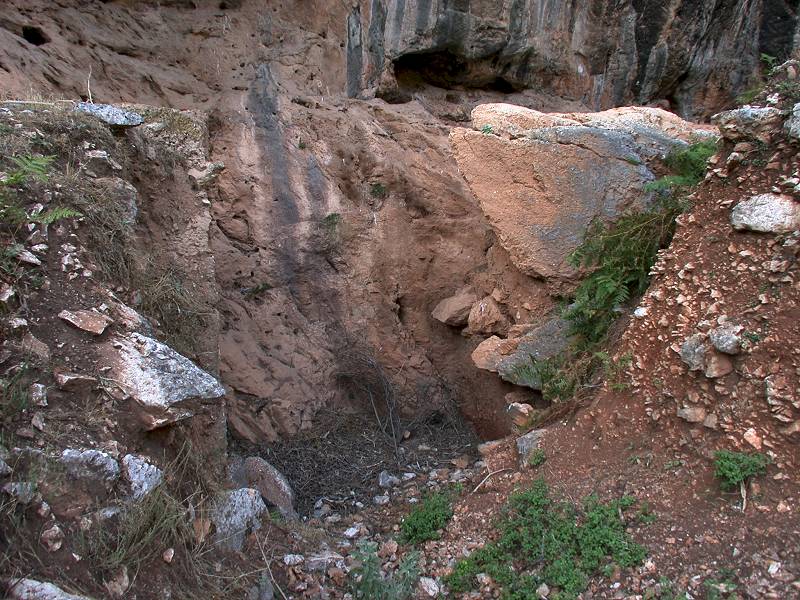
The excavated 6 m sequence revealed more than half a million flaked stone tools and fragments of animal bone. The finds were mostly from the Mousterién and the Upper Paleolithic.
At the time our reviewer visited the cave, the gate was broken, and it was possible to visit the cave itself. As we are convinced of cave protection, we ask visitors to be very careful when they also do so. Please do not destroy anything, so further excavations with better methods may reveal additional information about our ancestors.
 Search DuckDuckGo for "Rockshelter Asprochaliko"
 Google Earth Placemark
 OpenStreetMap
 Asprochaliko rockshelter (visited: 02-NOV-2024)
 Index
Index Topics
 Hierarchical
 Countries
 Maps
Maps