The Welsh Slate Museum
National Slate Museum
Useful Information
| Location: |
Llanberis, Gwynedd, LL55 4TY.
In the middle of the Padarn Country Park, Llanberis, North Wales on the A4086 trunk road. A555 motorway, exit Bangor, A487 or A4087 south towards Caernarforn, after 1.5 km leave road onto B4547 towards Llanberis. From Caerarfon A4086 to Llanberis. 500 m after Llanberis turn left to the visitor center. (53.121479, -4.115177) |
| Open: |
Easter to OCT daily 10-17. NOV to Easter Sun-Fri 10-16. Closed 24-DEC to 27-DEC, 01-JAN. [2021] |
| Fee: |
Free. Covid: booking a free ticket in advance required. Parking GBP 4.50 paybyphone app. [2021] |
| Classification: |
 Slate Mine,
slate quarry, opencast. Slate Mine,
slate quarry, opencast.
|
| Light: |
 Incandescent Electric Light System Incandescent Electric Light System
|
| Dimension: | |
| Guided tours: | |
| Photography: | allowed |
| Accessibility: | yes |
| Bibliography: |
Alun John Richards (1991):
A Gazeteer of the Welsh Slate Industry,
pp 34-37 |
| Address: |
The Welsh Slate Museum, Llanberis, Gwynedd, LL55 4TY, Tel: +44-300-111-2-333, Tel: +44-1286-870630, Fax: +44-1286-871906.
E-mail: |
| As far as we know this information was accurate when it was published (see years in brackets), but may have changed since then. Please check rates and details directly with the companies in question if you need more recent info. |
|
History
| 1787 | Dinorwig Quarry established. |
| 1788 | Assheton Smith paid bailiffs to evict people out of their quarries. |
| 1870 | workshops for the Dinorwig Quarry, now the museum buildings, built. |
| 1900-1903 | Penrhyn Strike, one of the longest in British labour history. |
| 1964 | Penrhyn Quarry purchased by the Alfred McAlpine company. |
| 1969 | Dinorwig Quarry closed. |
| 25-MAY-1972 | North Wales Quarrying Museum opened to the public. |
| 25-MAY-1972 | renamed Welsh Slate Museum. |
Geology
Description
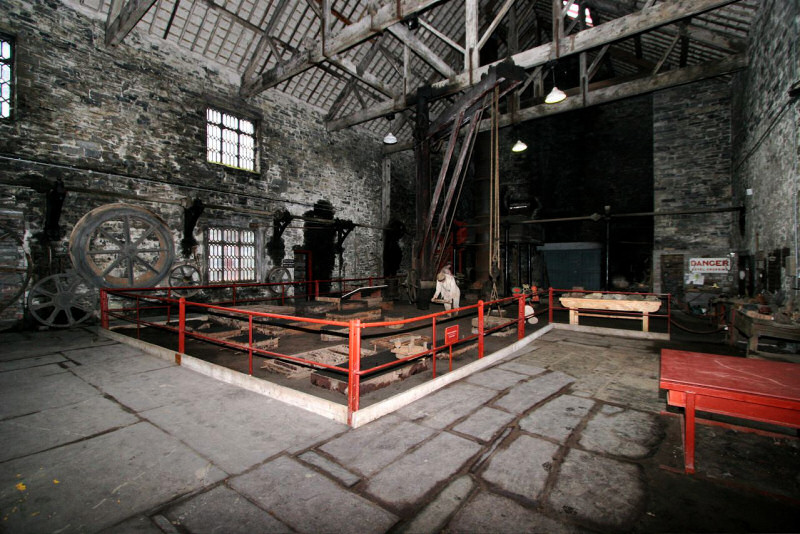
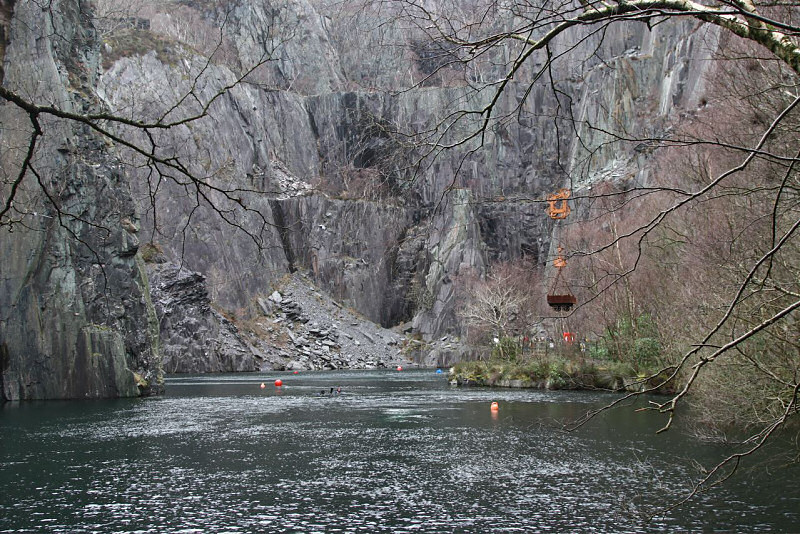
The Welsh Slate Museum is situated in the disused Dinorwig slate quarry.
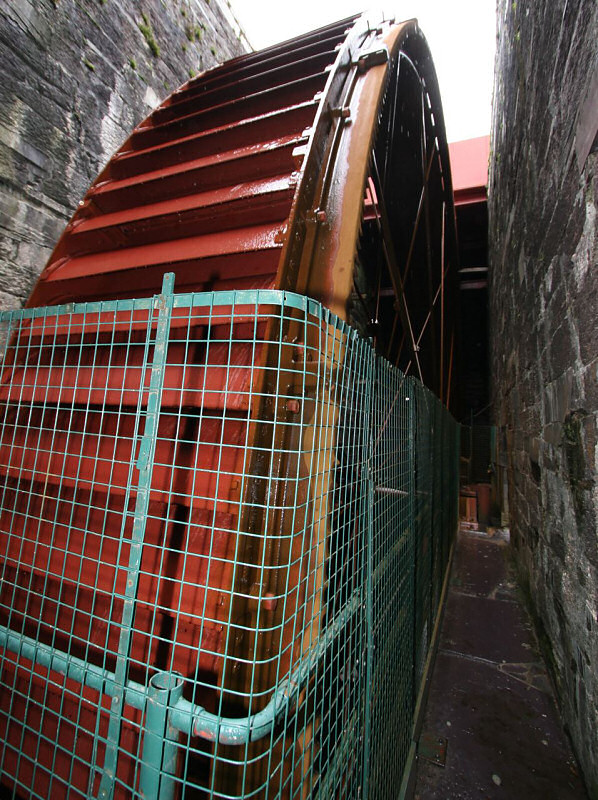
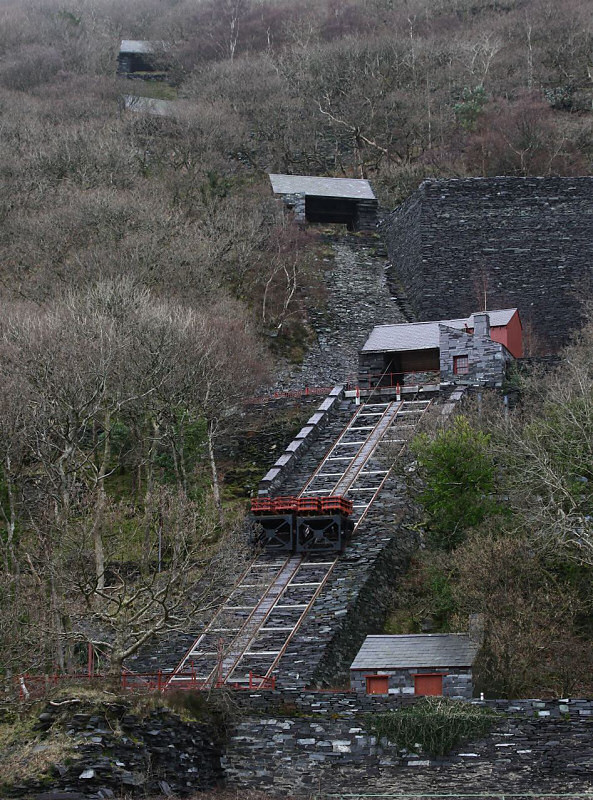
Features include a Victorian Workshop where traditional skills are used to split slates by hand. There are regular demonstrations of Brass casting and a Blacksmith at work. There is a unique 3D film show To Steal a Mountain. The giant waterwheel is claimed to be the largest on the British mainland. The restored incline, used to carry the slate down from the quarry face is the only working example in Britain. A terrace of quarrymens' houses from Tanygrisiau has been re-erected, stone by stone. These quarrymen worked in the underground quarries at Cwm Orthin.
There is the Ffowntan Café, named after the slateworkers' tea urn and of course the obligatory gift shop. Allow a whole day as there is so much to see and do.
Text by Tony Oldham (2002). With kind permission.
The National Slate Museum was previously known as the Welsh Slate Museum and before as North Wales Quarrying Museum. The museum is on the European Route of Industrial Heritage (ERIH) and part of Amgueddfa Cymru – National Museum Wales. It is located at Gilfach Ddu, the 19th-century workshops of the now disused Dinorwig Slate Quarry. The workshops served the needs of the quarry and its locomotives, so it had rail access in both used gauges. The quarry gauge was 1 ft 11½ in (597 mm) narrow gauge, the class of around 2 ft / 600 mm gauge was popular for field railways. Those privately owned narrow gauge railways were used in mines, in forestry, in agriculture, and in swamps. The Padarn Railway, which carried the slate from the quarry to Port Dinorwic, had a 4 ft (1,219 mm) narrow gauge. The museum is today connected to the nearby village of Llanberis by the Llanberis Lake Railway, a reconstructed tourist train, which uses part of the building as its workshops.
Local people have been working the mountain for centuries, during the Medieval the slate was mined in tiny quarries. But in the 18th century some families tried to unite the quarries. At the end of the 19th century, almost all land in Gwynedd was owned by five families. There was a yawning divide in living standards between the owners and the quarrymen.
The museum was opened in the year the slate mine was closed under the name North Wales Quarrying Museum. That is why so many tools and machines are in good condition. In 1970 the young museum received a £1.6 million grant from the National Lottery Heritage Fund, which was still called the National Land Fund at that time. It was refurbished and reopened in 1972 as Welsh Slate Museum.
 Search Google for "Welsh Slate Museum"
 Google Earth Placemark
 National Slate Museum - Wikipedia (visited: 27-DEC-2021)
 National Slate Museum, official website (visited: 27-DEC-2021)
 Index
Index Topics
 Hierarchical
 Countries
 Maps
Maps Search