Quelltuffpfad Lingenau
Useful Information
| Location: | Lingenau, Bregenzerwald. |
| Open: | no restrictions, be careful in winter [2007] |
| Fee: | free [2007] |
| Classification: |
 Tufa Deposits
Karst Trail Tufa Deposits
Karst Trail
|
| Light: | not necessary |
| Dimension: | |
| Guided tours: | Guded walks: D=1 h. Self guided walks: D=45 min. |
| Photography: | |
| Accessibility: | |
| Bibliography: | |
| Address: | Quelltuffpfad Lingenau |
| As far as we know this information was accurate when it was published (see years in brackets), but may have changed since then. Please check rates and details directly with the companies in question if you need more recent info. |
|
History
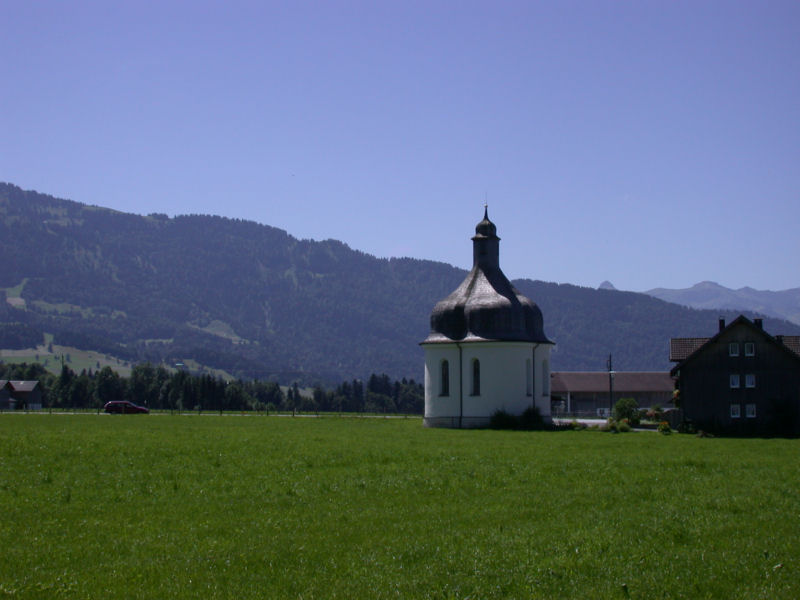
| 1722 | St. Anna chapel in Lingenau built with tufa from here. |
| 1950s | end of tufa quarrying. |
| 1998 | declared a Naturdenkmal (natural monument). |
| 1998 | Quelltuffpfad opened. |
Description

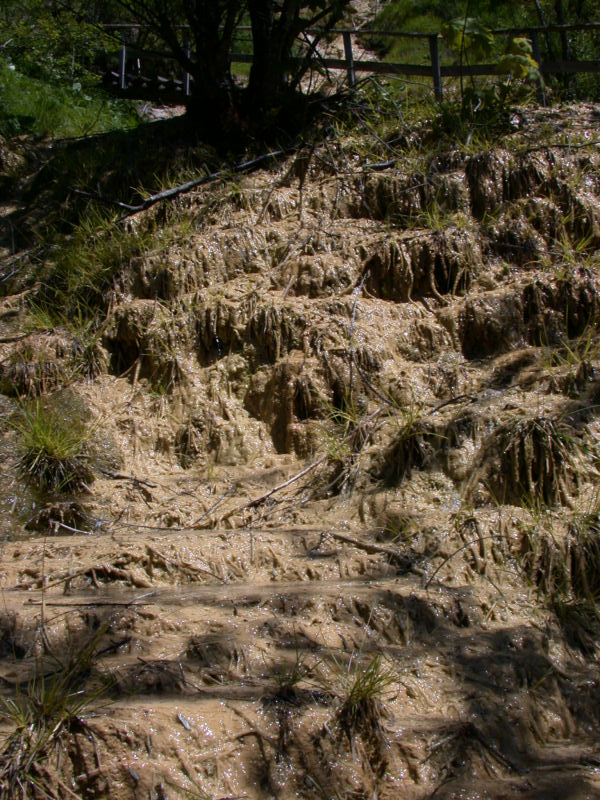
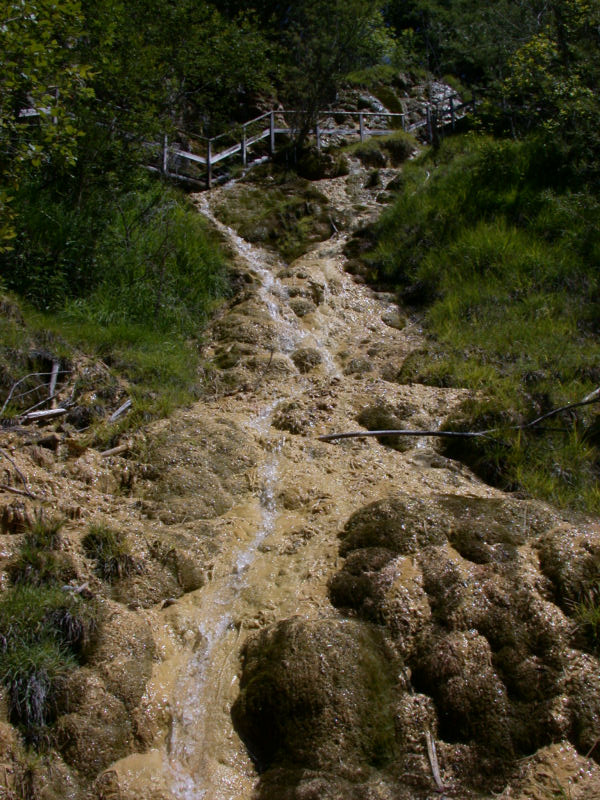
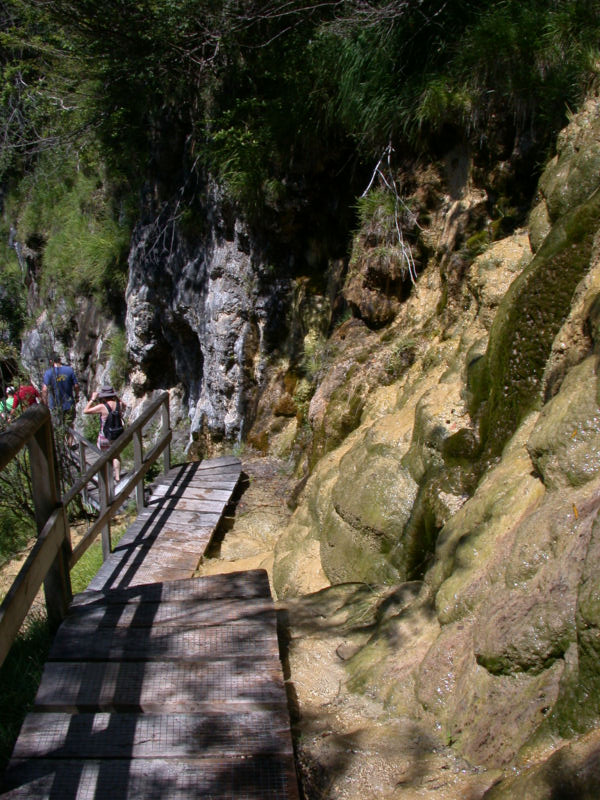
The Subersach valley is a steep gorge, cut into the wide plain around Lingenau. The road bridge is used for bungee jumping. Only a few hundred meters away, near the public bath is the start of a unique geologic trail. The Quelltuffpfad (Spring Tufa Trail) is a series of wooden paths, bridges and stairs, which allow a stroll through a unique deposit of tufa or travertine.
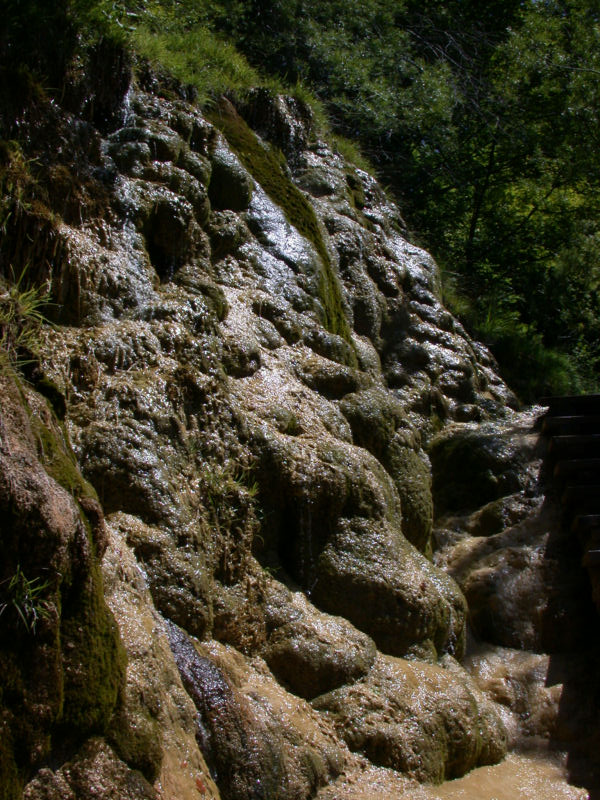
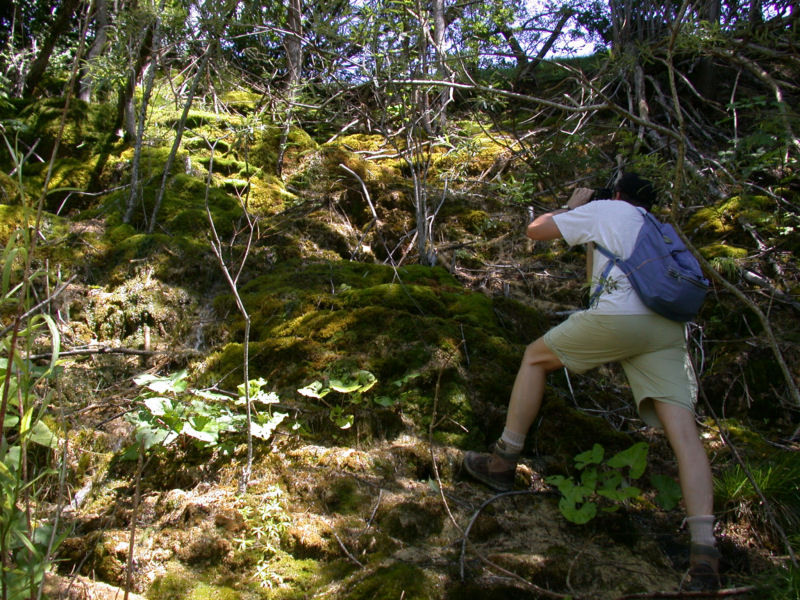
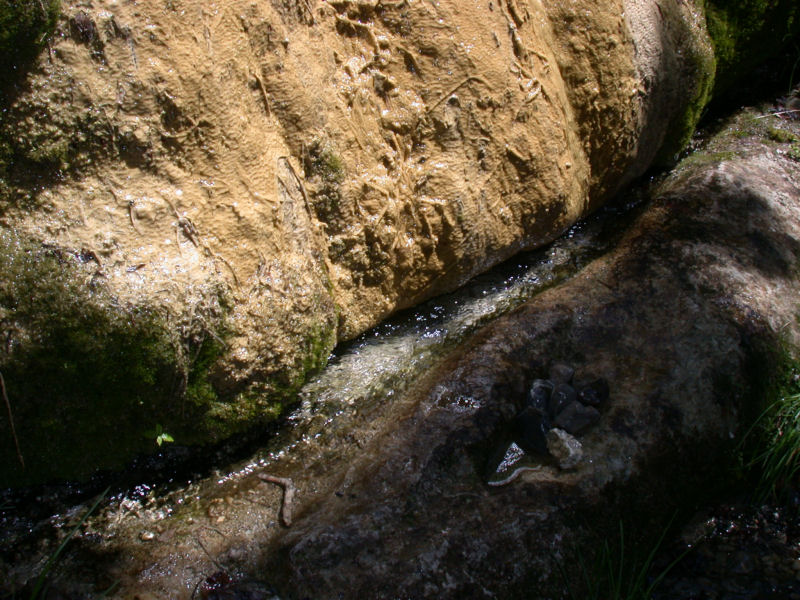
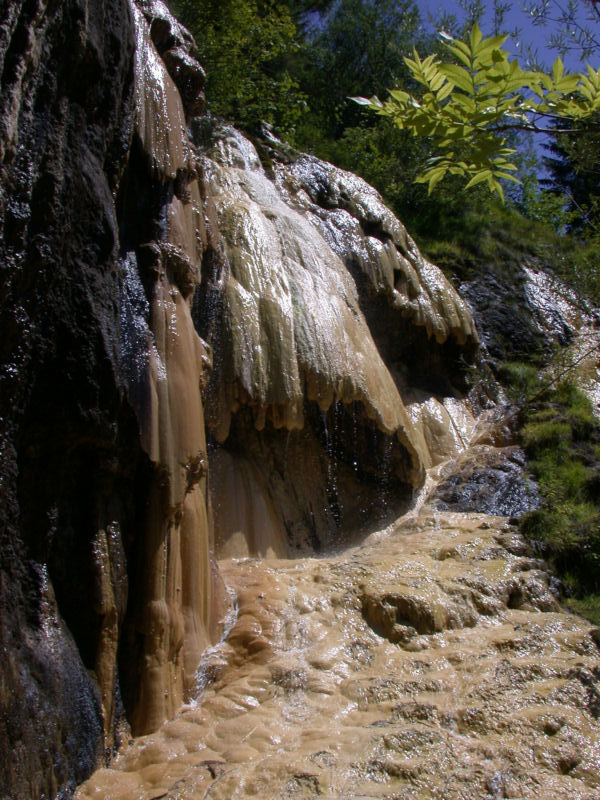
The water from the plains around Lingenau flows underground to the gorge. The rock it flows through is conglomerate, which consits of mostly crystalline gravel with a limestone rich cement. It was created during the late Ice Age, This limestone is dissolved by the water and reaches the various springs right below the rim of the Subersach valley. When flowing downhill from the spring to the river, the water looses its carbon dioxide, looses the ability to dissolve limestone, ande starts to deposit it where it flows, on moss, algae, ferns and leaves. The slope is 30 m wide and 40 m high, covered by several meters of tufa. The overhanging cliffs are covered by stalactites and curtains. The brooks are all flowing in yellow limestone beds. There are even some stone channels and rimstone pools.
The tufa from the Subersach valley was used in former centuries for the construction of buildings. The Baroque chapel of St. Anna from 1722 and the curch in Lingenau were both built using the tufa from here. It is estimated that 250m³ of Tufa were removed for those two builings.
|
|
| Quelltuffpfad Lingenau Gallery |
 Search Google for "Quelltuffpfad Lingenau"
 Google Earth Placemark
 Friede's Side..........: ...wieder mal der Quelltuffpfad...
 Index
Index Topics
 Hierarchical
 Countries
 Maps
Maps Search